SerpX vs Ahrefs: Which SEO Tool Is Better in 2026?
A practical, no-fluff comparison of SerpX vs Ahrefs—features, pricing, data accuracy, and real SEO workflows to help you choose the right tool for growth.
SerpX vs Ahrefs: Which SEO Tool Is Better in 2026?
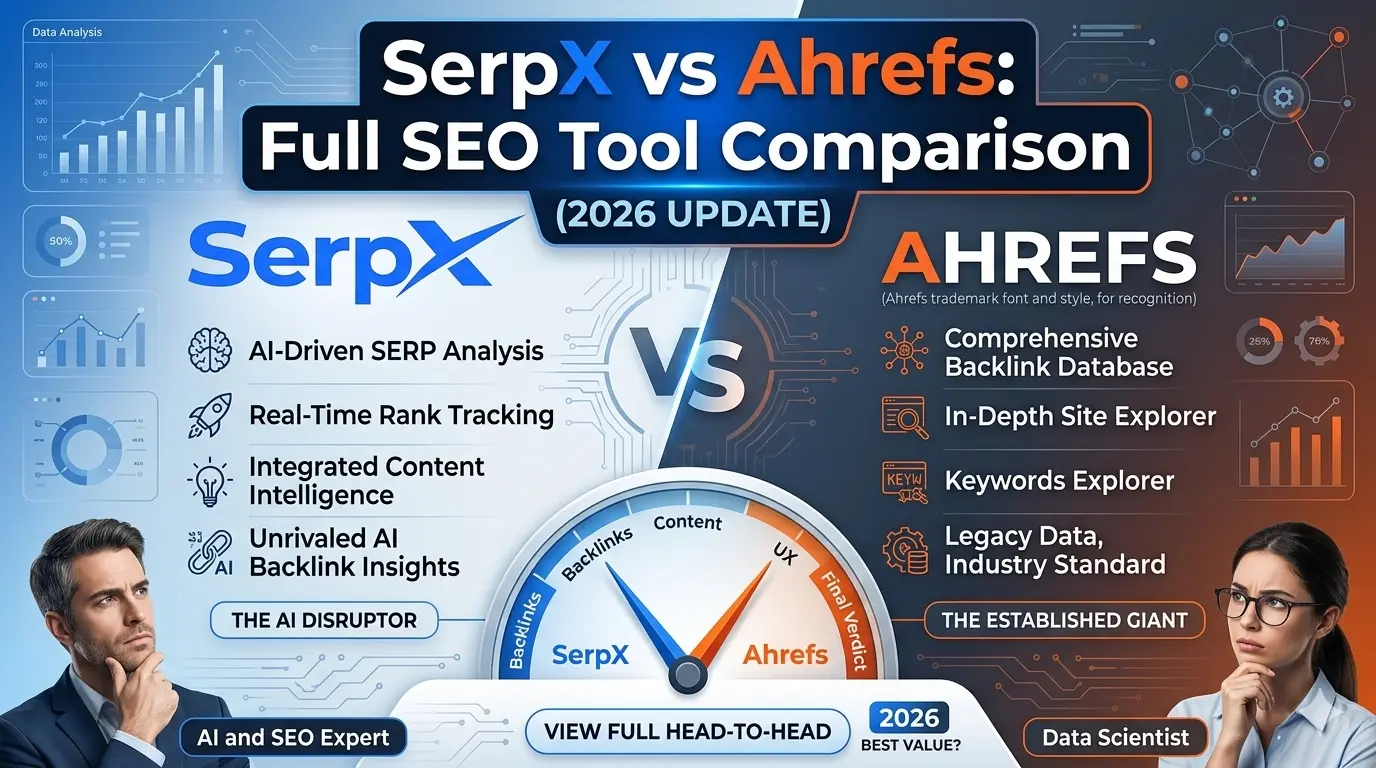
Choosing between SerpX and Ahrefs isn’t just about features—it’s about how each tool fits into real SEO workflows. If you’re comparing SerpX vs Ahrefs, you’re likely deciding between a traditional data-heavy platform and a newer AI-powered SEO system designed for speed and automation.
In this guide, we’ll break down both tools from a practical standpoint—what they’re good at, where they fall short, and which one actually helps you rank faster.
What Is SerpX?
SerpX is an AI-powered SEO platform designed to simplify complex workflows like keyword research, competitor analysis, and technical SEO fixes. Instead of just showing data, it focuses on actionable insights and automation.
For example, using the keyword gap analysis tool, you can instantly identify missing keywords your competitors rank for—and get suggestions on how to target them.
It also connects directly with content workflows, making it useful for teams that want to go from idea → execution quickly.
What Is Ahrefs?
Ahrefs is one of the most established SEO tools in the industry. It’s known for its massive backlink database and detailed keyword metrics.
It excels in:
- Backlink analysis
- Keyword research at scale
- Historical SEO data
- Site auditing
In practice, Ahrefs is a data-first tool—you get a lot of numbers, but you’re responsible for turning them into strategy.
SerpX vs Ahrefs: Core Differences
The biggest difference comes down to philosophy:
- Ahrefs: Data-heavy, manual analysis
- SerpX: AI-driven insights, faster execution
This matters because most users don’t struggle with data—they struggle with deciding what to do next.
Feature Comparison Table
| Feature | SerpX | Ahrefs |
|---|---|---|
| Keyword Gap Analysis | AI-powered insights + suggestions | Manual comparison |
| Competitor Research | Automated + simplified | Detailed but complex |
| Backlink Analysis | Core features available | Industry-leading database |
| Technical SEO Fixes | Actionable recommendations | Reports only |
| Ease of Use | Beginner-friendly | Steeper learning curve |
| AI Content Support | Built-in | Not native |
| Pricing | Affordable, credit-based | Expensive monthly plans |
Keyword Research: Which One Wins?
Ahrefs provides deep keyword metrics—search volume, keyword difficulty, click data—but interpreting this data requires experience.
SerpX takes a different approach. Using tools like competitor keyword research, it highlights opportunities directly.
In practice:
- Ahrefs = more data, more manual work
- SerpX = faster insights, less guesswork
If you’re experienced, Ahrefs gives you control. If you want speed, SerpX is more efficient.
Backlink Analysis Comparison
This is where Ahrefs clearly leads. Its backlink index is one of the largest in the industry.
However, for most users, the question isn’t “how many backlinks exist?”—it’s “which backlinks should I build?”
SerpX focuses more on actionable analysis via tools like backlink checker, helping you identify strategic opportunities instead of overwhelming you with raw data.
Technical SEO: Automation vs Reports
Ahrefs provides detailed audit reports, but you still need to interpret them.
SerpX simplifies this with tools like the technical SEO fixer, which gives direct recommendations.
Example:
- Ahrefs: “Page has slow load time”
- SerpX: “Fix these 3 issues to improve speed + ranking”
This difference is huge for beginners and busy teams.
Ease of Use and UX
One common mistake is underestimating UX in SEO tools.
Ahrefs can feel overwhelming at first. It’s powerful, but not intuitive for beginners.
SerpX is designed with a cleaner workflow—fewer clicks, clearer outputs, faster results.
This matters because friction = lost users.
Pricing Comparison
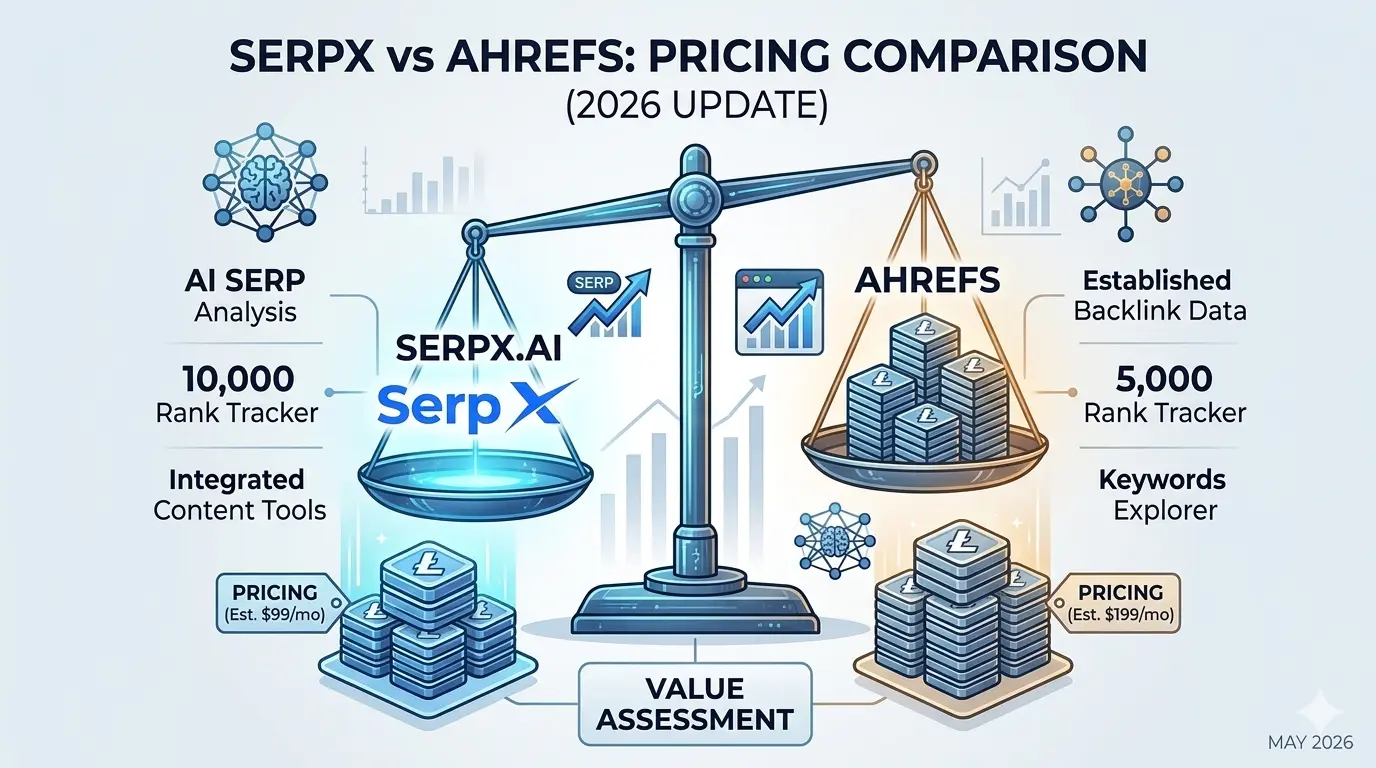
Ahrefs is known for being expensive, especially for small teams.
SerpX uses a credit-based model, making it more flexible and affordable.
- Ahrefs: Fixed monthly plans ($99+)
- SerpX: Pay for what you use
If you’re just starting or scaling carefully, this difference is significant.
When Should You Choose SerpX?
- You want faster results with less manual work
- You prefer AI-driven insights
- You’re focused on execution, not just analysis
- You need an affordable SEO tool
👉 You can start using SerpX tools instantly and test workflows without committing to a large subscription.
When Should You Choose Ahrefs?
- You need deep backlink data
- You’re an experienced SEO professional
- You rely heavily on manual analysis
- Budget is not a concern
Checklist: Choosing the Right Tool
- Do you need raw data or actionable insights?
- Are you beginner or advanced?
- How important is speed?
- What’s your budget?
- Do you want AI assistance?
Mistakes to Avoid
- Choosing based on brand, not workflow
- Overpaying for features you don’t use
- Ignoring UX and usability
- Relying only on data without execution
Frequently Asked Questions
Is SerpX better than Ahrefs?
It depends on your needs. SerpX is better for speed and automation, while Ahrefs excels in raw data and backlink analysis.
Is Ahrefs worth the price?
For advanced users and agencies, yes. For beginners, it may be overkill.
Can SerpX replace Ahrefs?
For many workflows—especially keyword research and competitor analysis—yes.
Which tool is better for beginners?
SerpX is easier to use and more intuitive.
Do I need both tools?
Some advanced users combine them, but most can succeed with just one.
Final Verdict: SerpX vs Ahrefs
In real SEO workflows, speed and execution matter more than raw data.
Ahrefs remains a powerful tool for deep analysis. But SerpX offers a more modern approach—AI-driven, faster, and more accessible.
If your goal is to move quickly and actually implement SEO strategies, SerpX is the better choice.
Start Using SerpX Today
If you want to simplify your SEO workflow and focus on results instead of complexity, try SerpX.
Create your free account and start analyzing your website in minutes.
Apply these ideas with SerpX tools
Turn insights into action with practical workflows for keyword research, competitor analysis, backlink review, and SEO planning.