SerpX vs Semrush: A Full, Honest Comparison (2026)
Choosing between SerpX and Semrush? This honest, side-by-side breakdown covers features, pricing, keyword research, and who each tool is actually built for.
SerpX vs Semrush: A Full, Honest Comparison (2026)
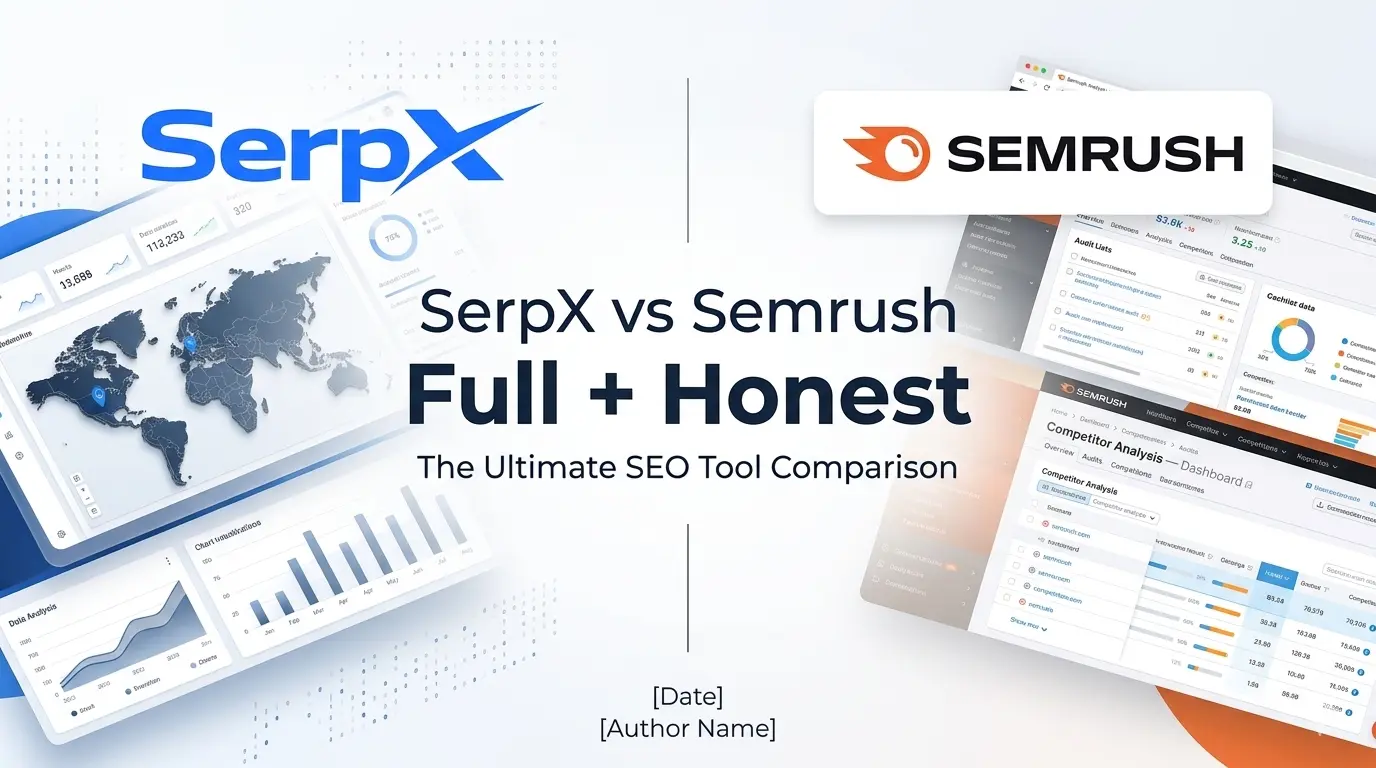
Picking the wrong SEO tool is an expensive mistake — not just in subscription cost, but in the hours your team loses working around its limitations. Both SerpX and Semrush sit near the top of most "best SEO tools" lists, but they solve different problems for different users. This comparison gives you the full picture: features, pricing, where each tool excels, and where it falls short.
No affiliate spin. No inflated star ratings. Just a practical breakdown you can actually use to make a decision.
Quick Overview: What Each Tool Is Built For
Semrush is a mature, all-in-one SEO platform that launched in 2008. It covers keyword research, backlink analysis, site auditing, content marketing, PPC data, and competitor intelligence — all under one roof. It's the de facto tool in many enterprise marketing departments and agencies managing dozens of client accounts.
SerpX is a newer, AI-native SEO platform designed around speed, clarity, and modern search workflows. Where Semrush can feel like a full operating system with a steep learning curve, SerpX prioritizes actionability — giving you insights you can implement today, not after navigating five layers of menus.
That difference in philosophy shapes everything from the UI to the data models to the pricing structure.
Feature-by-Feature Comparison Table
| Feature | SerpX | Semrush |
|---|---|---|
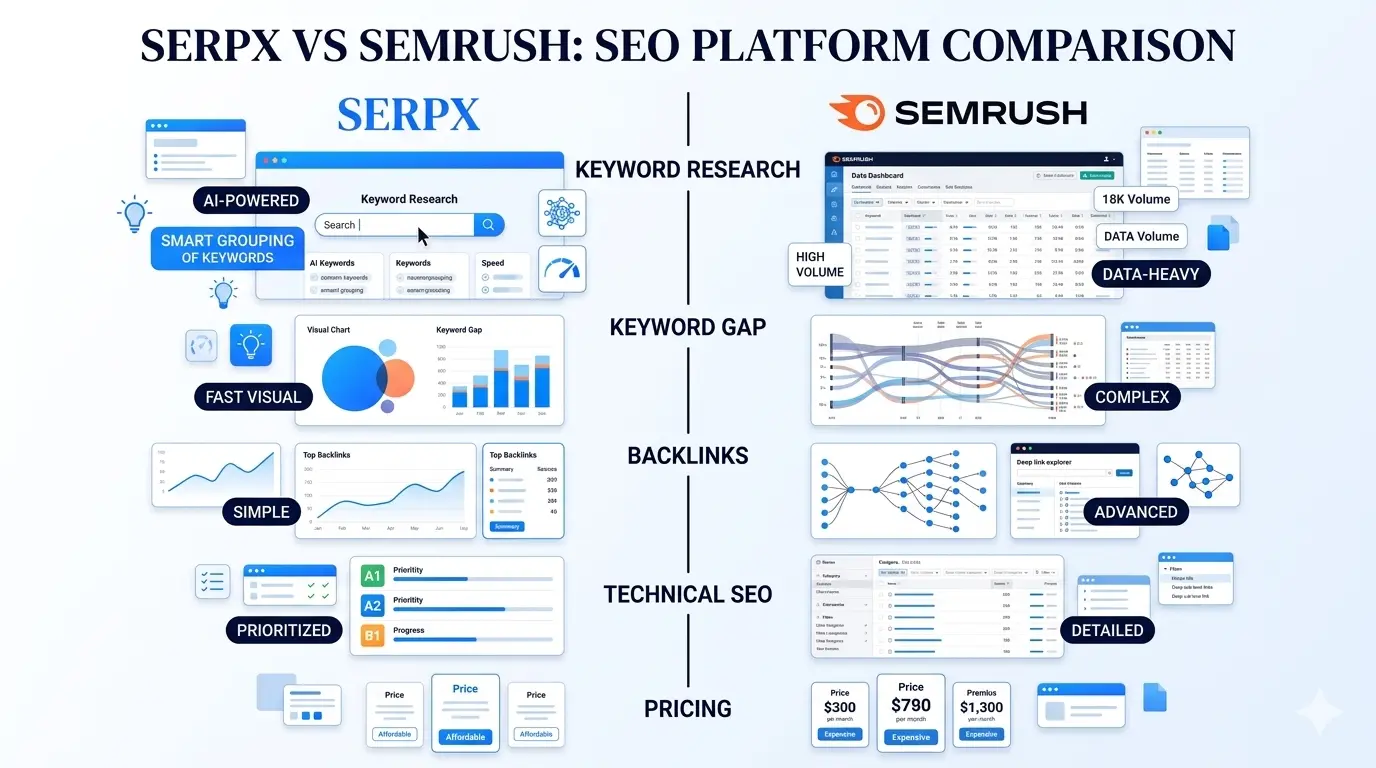
| Keyword Research | AI-powered, intent-aware suggestions | Extensive database, traditional filters |
| Keyword Gap Analysis | Fast, visual gap reports with prioritization | Available, but buried in sub-menus |
| Competitor Keyword Research | Direct competitor keyword extraction with intent labeling | Organic research reports with traffic estimates |
| Backlink Analysis | Clean backlink checker with toxic link flags | Deep link database, disavow tools, link building outreach |
| Technical SEO Audit | Auto-fix suggestions with priority scoring | Comprehensive crawl, highly configurable |
| AI SEO Features | Core part of the product | Added recently, still maturing |
| Content Tools | Focused on optimization and gap coverage | Full content marketing toolkit available |
| PPC / Paid Data | Not a focus | Strong paid search data and ad intelligence |
| Learning Curve | Gentle, onboards quickly | Steep — feature-dense UI |
| Pricing | Transparent, accessible tiers | Starts at $139.95/month (Pro plan) |
| Best For | Indie SEOs, growing teams, AI-first workflows | Agencies, enterprises, PPC + SEO teams |
Keyword Research: Depth vs. Actionability
Semrush has one of the largest keyword databases in the industry — over 25 billion keywords across 140+ geographic databases. If raw data volume is your priority, it's hard to argue with those numbers. You can dig into historical volume trends, CPC data, keyword difficulty scores, and related questions across virtually any market.
SerpX approaches keyword research differently. Instead of presenting you with a wall of data and asking you to filter it yourself, its AI engine surfaces keyword opportunities ranked by your actual ability to rank — factoring in your domain's existing authority, content coverage gaps, and search intent alignment. In real SEO workflows, that prioritization layer saves significant time.
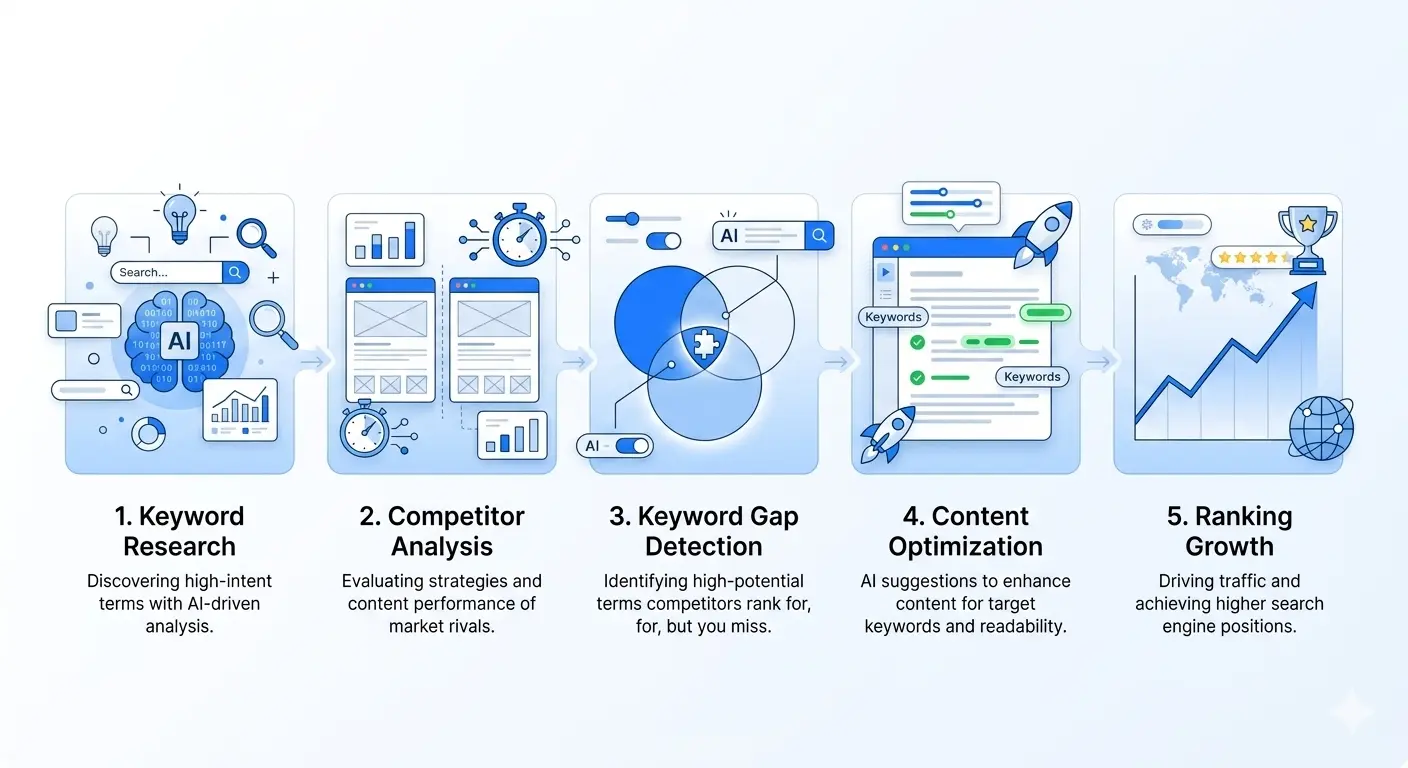
For teams doing keyword gap analysis, SerpX's visual gap reports make it much faster to spot where competitors are outranking you and which terms are realistically winnable. Semrush offers gap analysis too, but it requires more steps to extract the same insight.
Bottom line on keyword research: Semrush wins on raw data volume. SerpX wins on speed-to-insight and prioritization for organic-focused teams.
Competitor Intelligence: Who Tells You More?
Both tools let you analyze competitor organic rankings, but the experience is quite different.
With Semrush, you get deep historical traffic data, keyword position history, and the ability to cross-reference paid and organic strategies. For agencies doing thorough quarterly competitor audits, that depth is genuinely useful.
SerpX's competitor keyword tool focuses on what matters most for organic content strategy: which exact keywords your competitors are ranking for that you aren't, tagged by intent. It's a cleaner workflow for content teams who need to act on the data rather than just report on it.
If you're running competitor keyword research as part of a recurring content planning process, the SerpX approach tends to fit naturally into editorial workflows. Semrush is more powerful for comprehensive competitive intelligence audits done less frequently.
Backlink Analysis: Coverage and Practical Use
Semrush maintains one of the three largest link databases alongside Ahrefs and Majestic. Its backlink audit tool, link building module, and integration with Google Search Console make it a serious choice for link-focused SEOs.
SerpX's backlink checker is lighter but more focused — you get toxic link identification, anchor text distribution, and referring domain quality scores without the noise of a tool trying to upsell you on outreach campaigns. For teams who primarily need to monitor their link profile and flag problems, it's more than enough.
One common mistake is paying for Semrush's full link-building suite when all you actually need is a clean view of your own link profile. If you're running a content-first SEO strategy rather than a dedicated link acquisition operation, SerpX gives you what you need without the overhead.
Technical SEO Capabilities
Technical SEO is where Semrush has historically been strongest as an all-in-one tool. Its site audit covers 140+ technical checks, supports JavaScript rendering, and lets you schedule recurring crawls at scale. For enterprise sites with complex technical debt, that configurability matters.
SerpX's technical SEO fixer takes a more prescriptive approach. Rather than presenting you with a list of 200 issues and leaving prioritization to you, it scores and prioritizes fixes by estimated impact — so your dev team isn't wasting time on minor warnings while critical crawlability issues go unresolved.
Where SerpX's Technical Approach Stands Out
In practice, most SEO teams don't lack the ability to find technical issues — they lack the time and internal alignment to fix them. SerpX's priority-first format is specifically designed to make the case for fixes internally, not just surface them.
Where Semrush Goes Deeper
If you're managing multiple client sites, need to track technical health over time with detailed historical reports, or need full JavaScript rendering support, Semrush's audit is the more capable tool. The technical SEO guide on the SerpX blog covers how to think about prioritizing these issues regardless of which tool you use.
AI SEO Features: Native vs. Bolted On
This is where the gap between the two tools is most pronounced in 2026.
Semrush has been adding AI features — AI-generated content briefs, topic clustering through their Topic Research tool, and some generative content tools inside ContentShake. These are solid additions, but they feel like features added to an existing architecture rather than capabilities built from the ground up.
SerpX is built around AI SEO as a core concept. The AI isn't a module you turn on — it's how the platform thinks about ranking difficulty, content gaps, and opportunity sizing throughout every workflow. If you're building an AI-first content operation, that distinction is significant.
This matters because AI SEO isn't just about generating text — it's about using machine learning to surface patterns in search behavior that a spreadsheet-and-gut-feel workflow would miss entirely.
Pricing: Honest Numbers
Semrush pricing starts at $139.95/month for the Pro plan (limited to 5 projects), $249.95/month for Guru, and $499.95/month for Business. Annual billing brings those down somewhat, but it's a significant commitment for smaller teams. Add-ons for local SEO, Agency, and other modules stack on top.
SerpX offers transparent tiered pricing designed to be accessible at the growth stage — not just enterprise-ready at the top end. You can compare SerpX plans directly to see where the value sits for your team size and workflow.
The honest truth about pricing comparisons: cost-per-feature spreadsheets rarely capture the real cost, which is time. A cheaper tool that requires three hours of setup to produce one insight isn't cheaper if your analyst's hourly cost is high.
Checklist: How to Decide Between SerpX and Semrush
- Choose SerpX if: You want AI-native workflows, faster time-to-insight, accessible pricing, and your primary focus is organic content SEO.
- Choose SerpX if: You're a solo SEO, small team, or growing startup that can't afford to spend two weeks onboarding to a complex platform.
- Choose SerpX if: You prioritize actionable recommendations over maximum data volume.
- Choose Semrush if: You run a full-service agency managing PPC and SEO together for multiple clients.
- Choose Semrush if: You need enterprise-grade historical data, deep link database access, and highly configurable site auditing.
- Choose Semrush if: Your team is large enough to justify the learning curve and price point, and you're using PPC intelligence regularly.
- Consider both if: You have distinct SEO and paid media teams with different tool needs and budget authority.
Want to see how SerpX handles keyword gaps and competitor research in practice? Start a free trial and run your first competitor keyword gap report in under five minutes — no credit card required.
Common Mistakes to Avoid When Choosing an SEO Tool
Buying for Features You'll Never Use
Semrush has over 50 tools inside the platform. Most teams actively use five or six. Before committing to a top-tier plan, audit which features your team actually opened in the last 90 days on your current tools. Feature count is a marketing metric, not a value metric.
Assuming More Data Always Means Better Decisions
More data is only better if your team has the bandwidth to analyze it. Overwhelm is a real productivity cost. A tool that gives you 20 high-confidence, prioritized recommendations often drives more output than one that gives you 200 unfiltered data points to sort through yourself.
Ignoring Onboarding and Support Quality
The first 30 days with any new SEO platform are critical. If your team can't get up to speed quickly, the tool won't get used consistently — and inconsistent tool usage produces inconsistent SEO results. Ask each vendor about their onboarding process before signing a contract.
Locking In Annually Before Running a Real Workflow
Both SerpX and Semrush offer free trials or entry-level access. Use them. Run a real competitor analysis. Pull a real keyword gap report. See which interface actually fits how your team thinks. Annual pricing saves money but only if the tool genuinely fits your workflow.
Conflating Tool Features with SEO Strategy
No tool — regardless of how good it is — replaces a clear SEO strategy. The best SEO platform in the world won't save a site that's targeting the wrong keywords, publishing thin content, or ignoring technical fundamentals. Tools amplify a good strategy; they don't substitute for one.
Who Gets the Most Value from SerpX Specifically?
SerpX is particularly strong for teams that think in content clusters and want to move from keyword insight to published content fast. The AI-powered recommendations map naturally onto editorial calendars, and the competitor gap tools are built around the questions content strategists actually ask.
It's also genuinely better suited to companies in the growth phase — past the "we need to figure out SEO basics" stage but not yet managing 50 client accounts simultaneously. The pricing reflects that positioning: serious enough to be a real production tool, accessible enough that you're not financing it like enterprise software.
Frequently Asked Questions
Is SerpX a legitimate Semrush alternative or just a cheaper option?
SerpX is a legitimate alternative for teams focused on organic content SEO with AI-first workflows. It's not a cheaper version of Semrush — it's a different tool built around different priorities. Semrush has more raw data and a larger feature set; SerpX has faster workflows and native AI integration. Which is "better" depends entirely on your use case.
Can SerpX replace Semrush completely?
For most content-focused organic SEO teams, yes. If your workflow is heavily reliant on paid search data, multilingual PPC intelligence, or deep link prospecting outreach campaigns, Semrush has capabilities SerpX doesn't currently prioritize. But for keyword research, gap analysis, competitor intelligence, and technical SEO — SerpX covers the ground that matters for organic growth.
How does SerpX's keyword data compare to Semrush's database size?
Semrush has a larger raw keyword database. SerpX's advantage is in how it processes and surfaces that data — intent classification, priority scoring, and AI-driven opportunity identification. For most practical SEO workflows, the quality of insight matters more than the total number of rows in a database.
Is Semrush worth the price for a small business?
For many small businesses, Semrush's Pro plan at $139.95/month is more tool than they need, and the learning curve can eat time that small teams don't have. SerpX's accessible pricing and faster onboarding often make it a better practical fit for businesses under a certain scale — especially those without a dedicated SEO analyst.
Which tool is better for technical SEO audits?
Semrush offers a more configurable and deeply detailed technical audit, which is valuable for complex enterprise sites and agency client reporting. SerpX's technical SEO fixer prioritizes fixes by impact, which is often more practical for in-house teams who need to make a case for developer time. Choose based on whether you need depth or prioritization.
Does SerpX have a free trial?
Yes. SerpX offers a free trial that lets you run real workflows — including competitor keyword analysis and keyword gap reports — without a credit card. It's worth running an actual use case through it before making any decision.
Can I use both SerpX and Semrush together?
Some teams do use both — typically relying on SerpX for day-to-day content SEO workflows and Semrush for periodic deep-dive competitive audits or paid search work. Whether that dual-tool investment is justified depends on your team size and budget. For most growing teams, picking one and going deep on it produces better results than spreading focus across two platforms.
How does SerpX handle backlink analysis compared to Semrush?
Semrush has the larger and more mature backlink database with outreach and link-building tools built in. SerpX's backlink checker is focused on what most organic content teams actually need: link profile health, toxic link identification, and referring domain quality — without the complexity of a full link-building CRM. If dedicated link acquisition is a major part of your SEO program, Semrush or Ahrefs will serve that workflow better.
Final Verdict
Semrush is the more powerful tool by raw feature count. If you're running an established agency, managing large enterprise clients, or need to deeply integrate paid and organic data, its depth justifies the cost and the learning curve.
SerpX is the smarter choice for most in-house content teams, growing companies, and SEOs who want AI-native workflows that produce fast, prioritized, actionable insights. It's not trying to be Semrush with a lower price tag — it's a different tool built for how modern organic SEO actually gets done.
The cleanest way to decide: run both tools on the same real-world dataset — your own site and a key competitor. See which interface gives you answers faster and in a format your team can act on. That test will tell you more than any comparison article can.
Ready to see how SerpX handles your site? Start your free trial and run your first keyword gap and competitor analysis today. No credit card needed, and you'll have real insights to work with in under ten minutes.
Apply these ideas with SerpX tools
Turn insights into action with practical workflows for keyword research, competitor analysis, backlink review, and SEO planning.