What Are Keyword Gaps? (Beginner Guide + Examples)
Learn what keyword gaps are, how to find them, and how to use competitor data to uncover hidden SEO opportunities and grow your organic traffic faster.
What Are Keyword Gaps? (Beginner Guide + Examples)
Keyword gaps are one of the most overlooked opportunities in SEO. If your competitors are ranking for keywords that you’re not targeting, you’re leaving traffic—and revenue—on the table. Understanding keyword gaps is not just about finding missing keywords. It’s about identifying strategic opportunities that can accelerate your growth.
In this guide, you’ll learn exactly what keyword gaps are, how they work, and how to find them using real-world examples. We’ll also walk through practical workflows you can apply immediately—even if you’re just starting out.
What Are Keyword Gaps?
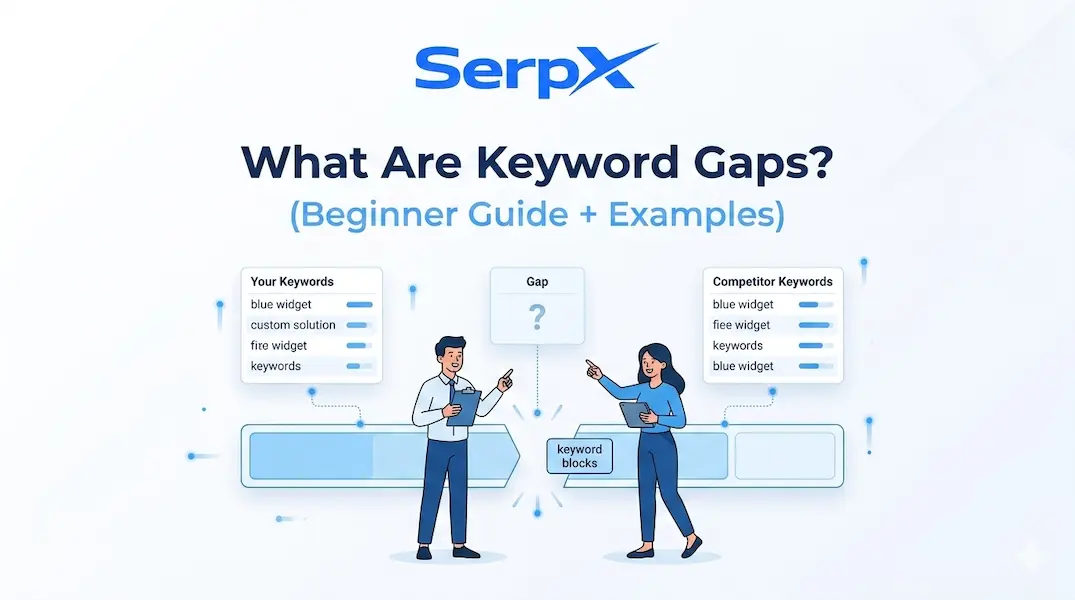
A keyword gap refers to keywords that your competitors rank for, but your website does not. These gaps highlight missed opportunities in your content strategy.
In practice, keyword gaps fall into three main categories:
- Missing keywords: You have no content targeting them
- Weak rankings: You rank, but far below competitors
- Untapped intent: You’re not covering specific search intent variations
This matters because search visibility is not just about what you publish—it’s about what you don’t.
Why Keyword Gaps Matter for SEO Growth
In real SEO workflows, most growth doesn’t come from reinventing content. It comes from identifying gaps and filling them efficiently.
Here’s why keyword gaps are powerful:
- They reveal proven topics that already generate traffic
- They reduce guesswork in keyword research
- They align your content with actual search demand
- They expose competitor strategies
If your competitors are ranking, Google has already validated those keywords. Your job is to do it better.
Keyword Gap vs Traditional Keyword Research
Traditional keyword research starts from scratch. Keyword gap analysis starts from what’s already working.
| Approach | Focus | Speed | Risk |
|---|---|---|---|
| Traditional Research | Brainstorm + tools | Medium | Higher |
| Keyword Gap Analysis | Competitor data | Fast | Lower |
One common mistake is relying only on keyword tools without validating against competitors. That leads to content that doesn’t rank.
Types of Keyword Gaps
1. Content Gaps
You simply don’t have a page targeting the keyword.
2. Ranking Gaps
You rank on page 2 or 3, while competitors dominate page 1.
3. Intent Gaps
You cover a topic, but miss specific search intent variations.
How to Find Keyword Gaps (Step-by-Step)
Let’s break this down into a practical workflow.
- Identify your main competitors
- Analyze their ranking keywords
- Compare with your domain
- Filter out irrelevant keywords
- Prioritize by intent and difficulty
To simplify this process, you can use tools like keyword gap analysis tool or competitor keyword research tool to instantly visualize opportunities.
Real Example of Keyword Gap Analysis
Let’s say you run an SEO blog.
Your competitor ranks for:
- keyword clustering guide
- search intent SEO
- low competition keywords
But your site only covers basic keyword research.
That’s a clear gap.
By creating content around these topics, you can quickly expand your topical authority.
How to Prioritize Keyword Gaps
Not all gaps are worth targeting.
Focus on:
- High intent keywords
- Low to medium competition
- Topics aligned with your niche
In practice, prioritization is what separates random content from strategic SEO growth.
Keyword Gap Analysis Checklist
- Identify at least 3 competitors
- Export their ranking keywords
- Compare against your domain
- Filter by relevance
- Group keywords by topic
- Create content clusters
- Link internally across articles
Common Mistakes to Avoid
- Targeting every keyword without filtering
- Ignoring search intent
- Creating thin content
- Not linking articles internally
- Focusing only on volume
One common mistake is chasing high-volume keywords that are too competitive. It’s better to dominate smaller clusters first.
How Keyword Gaps Fit Into Your SEO Strategy
Keyword gaps are not a standalone tactic. They are part of a larger system.
A strong workflow looks like this:
- Start with keyword gap analysis guide
- Expand using competitor keyword research strategies
- Support with content clusters
- Strengthen with internal linking
This creates a compounding effect where each article boosts the others.
Mid-Article Insight
If you’re manually comparing keywords across spreadsheets, you’re wasting time. Tools exist to automate this process and surface high-impact opportunities faster. A structured workflow using keyword gap tools can reduce research time dramatically.
How to Turn Keyword Gaps Into Traffic
Finding gaps is just the beginning.
To turn them into traffic:
- Create high-quality, in-depth content
- Match search intent precisely
- Use internal linking to boost relevance
- Update content regularly
This is where most people fail—they find keywords but don’t execute properly.
Frequently Asked Questions
What is a keyword gap in SEO?
A keyword gap is a keyword your competitors rank for but your site does not. It represents a missed traffic opportunity.
How do I find keyword gaps?
You can analyze competitor websites and compare their ranking keywords with yours using SEO tools.
Are keyword gaps important for beginners?
Yes. They provide a clear roadmap of what content to create without guessing.
How many keyword gaps should I target?
Focus on quality over quantity. Start with a few high-impact keywords.
Do keyword gaps guarantee rankings?
No, but they significantly increase your chances by targeting proven topics.
What tools can I use for keyword gap analysis?
You can use specialized SEO tools like SerpX to automate competitor comparison and find opportunities faster.
Final Thoughts
Keyword gaps are one of the fastest ways to grow your SEO traffic. Instead of guessing what to write, you’re using real data to guide your strategy.
If you want a faster way to identify opportunities, analyze competitors, and build a stronger content plan, you can start using SerpX keyword gap tool today.
Or, if you're ready to scale your SEO workflow, create your account here: Start with SerpX
Apply these ideas with SerpX tools
Turn insights into action with practical workflows for keyword research, competitor analysis, backlink review, and SEO planning.