Keyword Gap Analysis: Find Keywords Your Competitors Rank For
Learn how keyword gap analysis helps you find missing keywords, uncover SEO opportunities, and outrank competitors with a smarter strategy.
Keyword Gap Analysis: Find Keywords Your Competitors Rank For
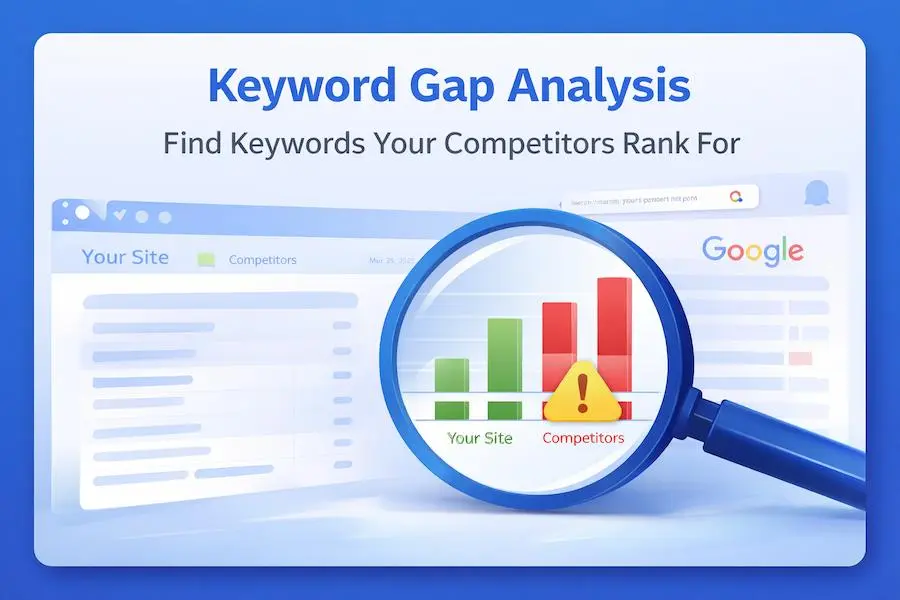
Keyword gap analysis is the process of identifying keywords your competitors rank for but your website does not. It helps uncover missed SEO opportunities and allows you to target proven keywords that already drive traffic.
Instead of guessing what to write or optimize, keyword gap analysis gives you a data-driven strategy to grow faster. In this guide, you’ll learn how to perform keyword gap analysis step by step and use it to outrank competitors.
What Is Keyword Gap Analysis?
Keyword gap analysis is a core SEO strategy used to compare your website with competitors and find keywords where they rank but you don’t. These “gaps” represent opportunities to create content, optimize pages, and gain traffic.
- Keywords competitors rank for
- Keywords you partially rank for
- Opportunities you completely missed
- High-value keywords with ranking potential
Why Keyword Gap Analysis Is Important
Most SEO strategies fail because they rely on assumptions. Keyword gap analysis removes guesswork and focuses on real opportunities.
- Discover proven keywords already driving traffic
- Identify missing content on your website
- Prioritize high-impact SEO opportunities
- Improve rankings faster
This makes it one of the most efficient SEO techniques available.
Types of Keyword Gaps
1. Missing Keywords
Keywords competitors rank for but your site has no presence.
2. Weak Rankings
Keywords where you rank lower than competitors.
3. Untapped Opportunities
Keywords with low competition but high potential.
4. High Intent Gaps
Keywords that lead to conversions but are not targeted.
How to Perform Keyword Gap Analysis (Step-by-Step)
Step 1: Identify Your Competitors
Focus on SEO competitors, not just business competitors. These are the websites ranking for your target keywords.
Step 2: Collect Competitor Keywords
Use tools like: Competitor Keywords Tool to extract keyword data quickly.
Step 3: Compare Domains
Use: Keyword Gap Tool to compare your domain with competitors.
Step 4: Filter Opportunities
- Low competition
- Relevant to your niche
- High search intent
Step 5: Build Content Strategy
Create or optimize pages targeting these keywords.
Keyword Gap Analysis Example
| Keyword | Your Rank | Competitor Rank | Opportunity |
|---|---|---|---|
| seo tools | Not ranking | #4 | Create new page |
| keyword research tools | #15 | #3 | Improve content |
| ai seo tools | #20 | #7 | Optimize + expand |
Best Practices for Keyword Gap Analysis
- Focus on intent, not just volume
- Prioritize easy wins first
- Create better content than competitors
- Use internal linking to boost pages
- Update content regularly
Common Mistakes to Avoid
- Targeting too many keywords at once
- Ignoring content quality
- Copying competitors instead of improving
- Not tracking results
How AI Improves Keyword Gap Analysis
AI tools can analyze large datasets and detect patterns much faster than manual research. They help you:
- Find hidden keyword opportunities
- Cluster keywords by topic
- Identify trends early
- Automate analysis
Learn more here: What Is AI SEO
How to Turn Keyword Gaps Into Rankings
- Create content targeting gap keywords
- Improve existing pages
- Strengthen internal linking
- Build authority with backlinks
- Track rankings and adjust strategy
Internal Linking Strategy
Final Thoughts
Keyword gap analysis is one of the most powerful SEO strategies for growth. Instead of guessing, you use real competitor data to find opportunities and rank faster.
When combined with AI tools and strong content strategy, it can significantly accelerate your SEO results.
Apply these ideas with SerpX tools
Turn insights into action with practical workflows for keyword research, competitor analysis, backlink review, and SEO planning.