How to pass AI content detection in Google Search: practical guide
A practical, non-techy guide to crafting AI-assisted content that passes AI content detectors and ranks in Google through intent, quality, and transparent workflows.

How to pass AI content detection in Google Search: practical guide
You're staring at a client dashboard where AI-generated content flags pop up in traffic reporting. The page looks informative, but a detector flags it as machine-written, threatening rankings and credibility. This isn’t a fantasy scenario: it happens when content quality signals, intent alignment, and human editorial input are missing. The goal isn’t to trick detectors; it’s to align content signals with user intent and Google’s evolving evaluation signals. This guide shows a practical, human-centered approach to producing AI-assisted content that stands up to detection and earns real search visibility.
Understand AI content detection in Google Search
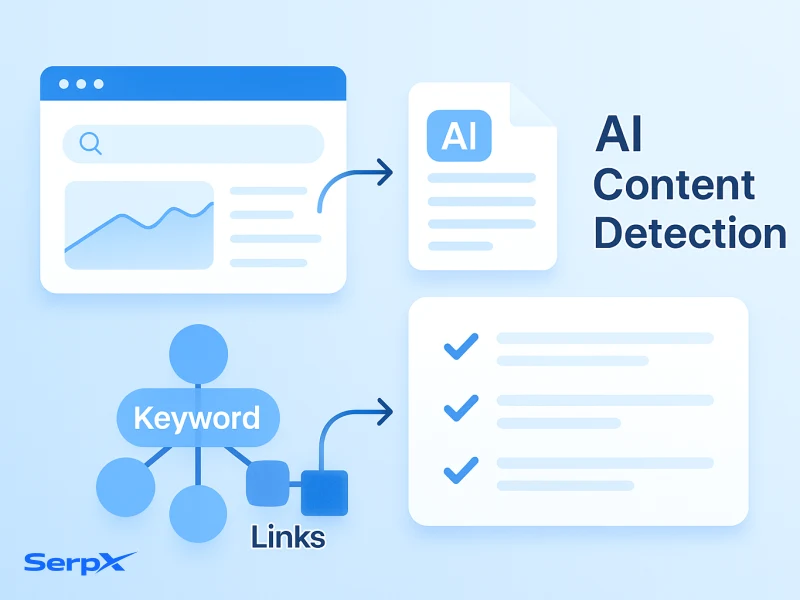
Detectors aren’t just flagging style; they’re watching for signals that content is authored with human intent and expertise. Key signals include:
- Depth of coverage and original insights beyond surface-level synthesis
- Clear author intent and value beyond generic templates
- Proper attribution, data points, and citations from credible sources
- Readable structure, logical flow, and natural narrative voice
- Consistency with user search intent and on-page signals like context and relevance
In practice, detectors evaluate both micro-signals (word choice, sentence rhythm) and macro-signals (topic authority, depth, and usefulness). The fastest way to pass is to treat AI as a tool for scaffolding, not a substitute for human judgment.
For a broader context on SEO fundamentals, you’ll find value in What Is SEO? Beginner to Advanced Guide.
Align your content creation process for detection resistance
In real workflows,
Successful content teams start with a strong process that blends AI efficiency with human rigor. Practical steps:
- Write a tight content brief that defines audience, intent, and unique take before any drafting begins
- Use AI to draft a scaffold, not the final product
- Assign a human editor to fact-check, add nuanced insights, and verify data
- Increase topical depth by incorporating expert quotes, case studies, and original analyses
- Apply a structured outline and clear sectioning to improve readability and crawlability
This approach mirrors practical workflows you may already know from advanced keyword research and content planning. If you want a primer on AI-assisted keyword research, AI keyword research in 2026 offers hands-on guidance.
Concrete decision point: decide early whether you’ll rely on AI for drafts or solely for structure—and plan the editorial review accordingly. For structural guidance, see What Is SEO? guide and Keyword Research Guide.
Practical techniques to pass detection without sacrificing quality
Below are proven techniques you can apply in real projects. Each technique focuses on user value while keeping detection risk low.
- Anchor AI drafts with human-led intent scaffolding: Start with a concrete outline that mirrors user questions and search intent. Have a human write the introduction and conclusion to frame the topic with authority.
- Layer credible data and unique insights: Replace generic statements with data, experiments, benchmarks, or client-specific observations. Include citations from credible sources.
- Use AI for structure, not verbatim content: Generate section headers, transitions, and summaries, then fill them with expert analysis and paraphrased, human-grounded phrasing.
- Improve readability and narrative flow: Short sentences, varied rhythm, and purposeful story arcs keep readers engaged and signal human authorship.
- Diversify media and citations: Add charts, screenshots, or quotes from experts. Link to primary sources where possible.
- Strengthen on-page signals: Optimize for intent, add relevant internal links, and ensure title tags and meta descriptions clearly reflect user goals.
To compare different approaches at a glance, review the table below. It helps decide whether to rely on AI-heavy workflows or keep more content human-driven.
| Approach | Detection Risk | Quality Trade-off | Best Use Case |
|---|---|---|---|
| AI-only writing | High | Low-to-medium; risk of generic tone | Brainstorming, outlines, fast first drafts (with later edits) |
| Hybrid AI + human editor | Low to moderate | High; strongest blend of speed and authority | Authoritative guides, niche topics requiring nuance |
| Human-only writing | Low | High; slower throughput | Thought leadership, complex analyses, high-stakes pages |
What to do next: pair AI-assisted drafting with a human editor, especially for posts that aim to build topical authority or contain data-heavy insights. If you want to test your content with detection signals, try SerpX’s own AI Content Detector to validate before publishing.
Need practical tooling to implement these steps? Explore SerpX AI Tools for scalable workflows.
SerpX workflow: turning theory into practice
From an SEO operations perspective,
Here’s a practical 6-step workflow you can implement tonight using SerpX tools. It emphasizes alignment, accountability, and measurable quality checks.
- Brief and intent mapping: Build a concise brief with audience, questions asked, and the exact intent you’re satisfying. Bring in competing pages’ angles using a Keyword Gap analysis.
- Keyword and topic research: Use Competitor Keyword Research Tool to map opportunities and clusters, then feed insights into your outline.
- Outline and scaffolding: Create an outline with clear H2s and H3s that cover user questions and practical steps. Use AI to draft sections, not the entire piece.
- Draft and initial review: Generate a first draft then hand it to a writer/editor for refinement. Use AI Content Detector to spot potential red flags early.
- Quality hardening: Add data, citations, quotes, and real-world examples. Rework sentences to reduce repetition and improve flow.
- Publish and monitor: After publication, monitor rankings and user signals. Iterate based on engagement data and SERP features you capture with SerpX.
Complete this workflow and you’ll often see better alignment with user intent and more durable rankings. For a broader workflow reference, check Scaling Content Production Using AI SEO Tools.
Want a faster sandbox to test these steps? Try the Keyword Gap Tool for fast opportunity mapping, or the Backlink Checker to validate authority signals.
Implementation checklist
Use this checklist at the start of every post to keep detection-resilience top of mind without sacrificing value.
- Define audience intent and key questions
- Draft a tight outline with logical flow
- Use AI for structure; write or edit core sections personally
- Integrate data, examples, and credible sources
- Publish with clear on-page signals: title, H1, meta, and internal links
- Run a detector pass and adjust for any flagged areas
- Monitor performance and refine based on user engagement
Common mistakes to avoid
One thing many teams miss:
These slip-ups still trip teams up frequently. Spot them early to preserve both detection integrity and long-term rankings.
- Over-relying on AI without meaningful human editing or data validation
- Forgetting to cite sources or to add unique, publish-ready insights
- Ignoring search intent in favor of keyword stuffing or filler content
- Lack of structure, poor readability, or missing internal links
- Publishing stale data or unverified claims without checks
Frequently Asked Questions
What exactly is AI content detection in Google Search?
It's a set of signals Google uses to assess whether content aligns with user intent, demonstrates expertise, and provides value. Detection looks at structure, originality, data, and the overall user experience, not just whether a machine was used to draft text.
Can you pass AI content detection without sacrificing quality?
Yes, with a hybrid workflow that prioritizes human editing, credible data, and clear intent alignment. AI can accelerate drafting, but humans must harden the content with insights, accuracy, and narrative clarity.
Do detectors only evaluate text quality?
Text quality matters, but detectors also consider topical authority, internal linking, data citations, and how well the content answers real user questions.
What role does SerpX play in passing detection?
SerpX provides structured workflows, keyword clustering, competitive insights, and quality checks that help you produce content with stronger intent alignment and editorial rigor.
What are best practices for long-term rankings when using AI?
Maintain human oversight, keep content up-to-date with fresh data, continuously improve on-page signals, and invest in editorial processes that produce evergreen value.
Ready to take control of AI-assisted content?
Start with SerpX today to organize your workflows, test content signals, and improve rankings. See pricing and options to get started.
View Pricing or Register to begin.
Apply these ideas with SerpX tools
Turn insights into action with practical workflows for keyword research, competitor analysis, backlink review, and SEO planning.