What Is SEO? Beginner to Advanced Guide
Learn what SEO is, how it works, and how to go from beginner to advanced with a practical, step-by-step strategy that drives real traffic and rankings.
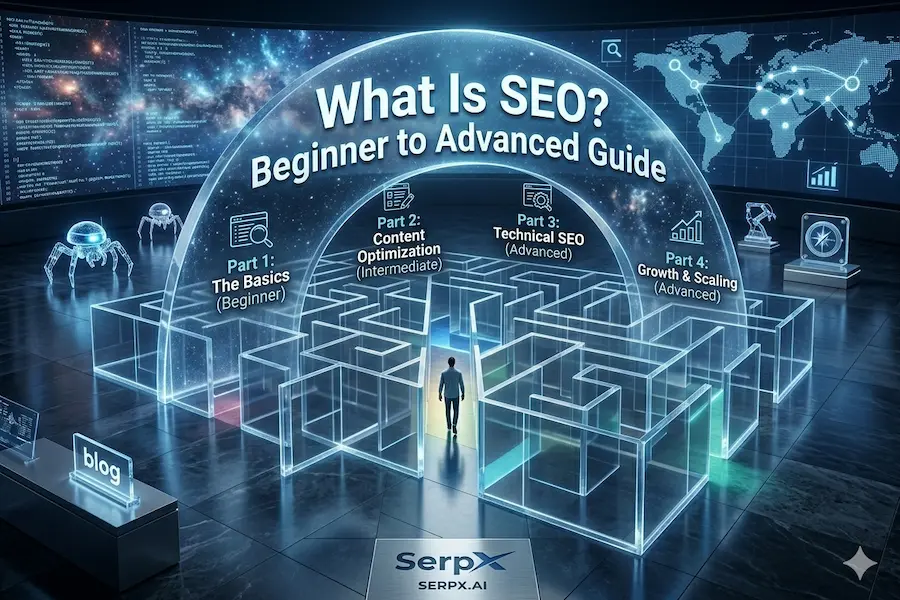
What Is SEO? Beginner to Advanced Guide
Search Engine Optimization (SEO) is the process of improving your website so it ranks higher in search engines like Google. But in real SEO workflows, it’s not just about rankings—it’s about visibility, traffic quality, and conversion.
This guide breaks SEO down from beginner concepts to advanced strategies you can actually apply. Whether you’re launching a SaaS product or scaling an existing site, this is the framework that works in practice.
What Is SEO and Why It Matters
SEO is the discipline of making your website easier for search engines to understand and more valuable for users. The goal is simple: attract organic traffic that converts.
This matters because organic traffic compounds. Unlike ads, once you rank, you keep getting traffic without paying per click.
How Search Engines Actually Work
Before you optimize anything, you need to understand how search engines operate:
- Crawling: Bots discover your pages
- Indexing: Pages are stored in a database
- Ranking: Algorithms decide which pages appear first
One common mistake is optimizing content without ensuring it can be crawled and indexed properly.
Core Types of SEO
On-Page SEO
This includes content, headings, keywords, and internal linking. Everything inside your page.
Off-Page SEO
Mainly backlinks—links from other websites that signal authority.
Technical SEO
Site speed, crawlability, indexing, and structure. Learn more in this technical SEO guide.
Beginner SEO Strategy: Where to Start
If you're new, focus on these steps:
- Keyword research
- Content creation
- Basic on-page optimization
- Internal linking
Use tools like the competitor keyword research tool to find what already works in your niche.
Keyword Research: The Foundation
Every SEO strategy starts with keywords. These are the queries users type into search engines.
In practice, focus on:
- Search intent (what the user wants)
- Competition level
- Traffic potential
You can also explore competitor keyword strategies to uncover hidden opportunities.
Content SEO: Creating Pages That Rank
Content is still the core of SEO. But not just any content—structured, helpful, and aligned with intent.
Each page should include:
- Clear H1 and structured headings
- Relevant keywords
- Internal links
- Actionable value
SEO Workflow: Beginner vs Advanced
| Level | Focus | Tools | Outcome |
|---|---|---|---|
| Beginner | Basic keywords + content | Keyword tools | Initial rankings |
| Intermediate | Content clusters + backlinks | Gap analysis tools | Traffic growth |
| Advanced | Technical + scaling systems | Full SEO suites | Authority + dominance |
Technical SEO: The Hidden Layer
This is where many sites fail. Even great content won’t rank if your site has technical issues.
Use tools like the technical SEO fixer to identify problems such as:
- Slow loading pages
- Broken links
- Indexing errors
Link Building: Authority Signals
Backlinks remain one of the strongest ranking factors.
Focus on:
- Guest posting
- Content marketing
- Digital PR
You can analyze backlinks using the backlink checker tool.
SEO Checklist (Before You Publish)
- Keyword in title and H1
- Meta title and description optimized
- Internal links added
- Page loads fast
- Mobile-friendly design
- Content matches search intent
Common SEO Mistakes to Avoid
- Ignoring search intent
- Keyword stuffing
- No internal linking
- Publishing thin content
- Not tracking performance
Mid-Strategy Insight
If you’re serious about SEO, don’t guess. Use data. Tools like keyword gap analysis help you find opportunities competitors already rank for.
How SEO Connects to Your Entire Growth Strategy
SEO is not isolated. It connects to:
- Content marketing
- Product positioning
- Conversion optimization
This is why SEO scales better than most acquisition channels.
Frequently Asked Questions
What is SEO in simple terms?
SEO is optimizing your website to rank higher in search engines and get organic traffic.
How long does SEO take?
Typically 1–3 months for early results, and 3–6 months for strong growth.
Is SEO better than ads?
SEO is slower but more sustainable. Ads are faster but cost money continuously.
Do I need technical skills for SEO?
Not at the beginner level, but advanced SEO requires technical understanding.
What tools should I use for SEO?
Start with keyword research, then expand to backlink and technical tools.
Can I do SEO without content?
No. Content is essential because search engines rank pages, not ideas.
Is SEO still relevant in 2026?
Yes. SEO is evolving, but organic search remains a core traffic source.
Final Thoughts: From Beginner to Advanced
SEO is a long-term game. The difference between beginners and advanced users is not knowledge—it’s execution and consistency.
Start Building Your SEO System
If you want to move faster, start using data-driven tools. You can create a free account on SerpX and begin analyzing your site, competitors, and keyword opportunities in minutes.
That’s how you turn SEO from theory into growth.
:contentReference[oaicite:0]{index=0}
Apply these ideas with SerpX tools
Turn insights into action with practical workflows for keyword research, competitor analysis, backlink review, and SEO planning.