SEO for Dentists: A Practical Guide to Getting More Local Patients
Learn how SEO for dentists works in practice, from local rankings and service pages to content, reviews, and technical fixes that help attract more qualified patients.
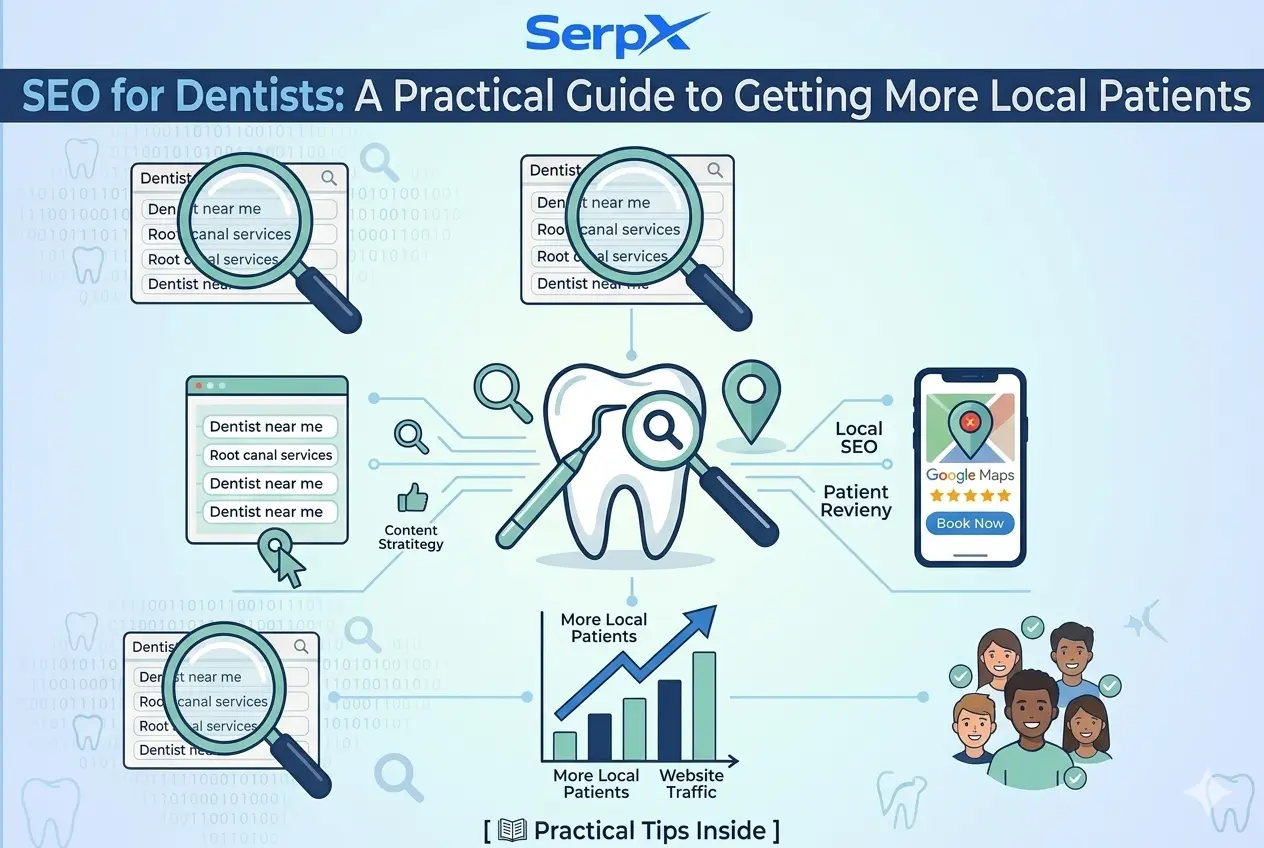
SEO for Dentists: How to Attract More Local Patients Without Wasting Time on Generic Marketing
SEO for dentists is not just about “ranking on Google.” It is about becoming visible when someone nearby needs a cleaning, implant consultation, emergency dental visit, Invisalign provider, or cosmetic dentistry clinic. That difference matters. A dental practice does not need random traffic from everywhere. It needs qualified local searches that turn into booked appointments.
In real SEO workflows, dental SEO succeeds when the strategy matches the way patients actually search. People do not search like marketers. They search for phrases such as “dentist near me,” “best cosmetic dentist in Dubai,” “emergency dentist open now,” or “Invisalign consultation.” If your website is missing location relevance, clear service pages, trust signals, and technical consistency, you lose those opportunities to clinics that are not necessarily better, just easier to find.
This guide breaks down what works, what gets ignored too often, and where dentists should focus first. You will also see where supporting content, technical fixes, and local signals connect. If you want the broader foundation first, read our technical SEO guide and then come back to implement the local pieces on top of it.
Why SEO matters more for dental clinics than many other businesses
Dental practices compete in one of the clearest high-intent local search categories on the web. A patient is rarely browsing for entertainment. They are searching with a problem, a need, a budget, a location, and often a sense of urgency. That makes SEO especially valuable because ranking for the right queries can drive appointments month after month.
Paid ads can work, but they stop the moment you stop paying. SEO builds an asset. One well-optimized service page for “dental implants in Dubai Marina” or “children’s dentist in Jumeirah” can keep generating leads long after the page is published.
This matters because search demand in dentistry is usually segmented by three things: service type, location, and trust. Your site has to reflect all three. If it does not, even a beautiful design will underperform.
What patients actually search for before they book
One common mistake is assuming all dental SEO starts and ends with “dentist near me.” That keyword matters, but it is only one part of the search landscape. In practice, patients search across multiple stages.
High-intent service queries
These include terms such as “emergency dentist,” “teeth whitening clinic,” “Invisalign dentist,” “root canal specialist,” or “dental implants consultation.” These users are often closer to booking, especially when the query includes a city or neighborhood.
Comparison and trust queries
People also search for “best dentist for veneers,” “dentist reviews,” “affordable dentist,” or “female dentist near me.” These searches often reflect hesitation rather than low intent. The patient is filtering choices.
Educational queries
Queries such as “how long does Invisalign take,” “is teeth whitening safe,” or “dental implant recovery time” may look informational, but they are commercially useful. They help clinics appear earlier in the decision journey and build trust before the patient ever lands on a booking page.
This is where content strategy becomes important. Your blog and service pages should not compete with each other. They should support each other. Our guide on competitor keyword research is useful here because it helps uncover which services and content angles competing clinics already rank for.
How to build the right page structure for dental SEO
A dental website should be simple enough for patients to use and structured enough for search engines to understand. The best-performing setups usually follow a clear hierarchy.
- Homepage targeting the clinic brand and core location
- Main service pages for high-value treatments
- Location pages where there is genuine geographic relevance
- Doctor or team pages to strengthen trust and expertise
- FAQ-rich supporting content answering patient concerns
- Contact, booking, insurance, and pricing guidance pages where appropriate
Each major treatment should usually have its own page. Do not bury implants, Invisalign, veneers, pediatric dentistry, and emergency care on one generic “services” page and expect strong rankings. A page that tries to rank for everything usually ranks for very little.
Service pages: the foundation of SEO for dentists
If you only fix one thing on a typical clinic website, fix the service pages. They are often too thin, too similar, or too salesy. Strong service pages balance clarity, local relevance, trust, and conversion.
What a strong dental service page should include
- A clear H1 that matches the service and location intent naturally
- A short explanation of who the treatment is for
- Benefits, process, expected timeline, and common concerns
- Before-and-after context when legally and ethically appropriate
- Frequently asked questions based on real patient objections
- Internal links to related services and educational resources
- A prominent appointment or consultation CTA
For example, an Invisalign page should not read like a generic brochure. It should answer practical questions: who is a good candidate, how long treatment may take, what follow-up visits involve, whether aligners affect eating or speech, and when a traditional orthodontic referral may still be necessary.
If you want to identify missing service opportunities or content gaps, the keyword gap tool can help compare your site against competitors already ranking for nearby treatment queries.
Local SEO for dentists: where most appointment growth comes from
For most clinics, local SEO is the highest-leverage channel because the search intent is close to conversion. Ranking locally depends on more than website copy. You need a strong local footprint across your site and your business listings.
Location relevance
Your city, neighborhood, or service area should appear naturally in key places: title tags, headings where relevant, body copy, contact details, and local landing pages. Do not force location names unnaturally into every sentence. That feels spammy and rarely helps.
Google Business Profile alignment
Your website and Google Business Profile should reinforce each other. Clinic name, address, phone number, opening hours, service categories, and treatment mentions need to be consistent. Mismatch creates friction for both users and search engines.
Review signals and trust
Reviews are not a side detail in dental SEO. They directly influence click-through behavior. A clinic with credible recent reviews often earns the click even if it is not the first blue link. The SEO lesson is simple: visibility gets you seen, trust gets you chosen.
For practices expanding into multiple areas, create location pages only when they reflect real-world operations. Thin city pages copied with swapped place names are one of the fastest ways to create low-value content.
Content marketing for dentists: what to publish and what to skip
Dental blogs are often filled with broad, low-conversion topics that do little for traffic or trust. That happens because many clinics publish what is easy to write, not what patients actually search.
Better topics usually sit at the intersection of patient anxiety, treatment consideration, and local demand. Useful examples include:
- How to choose between Invisalign and braces
- What to expect after a dental implant consultation
- How often children should see a pediatric dentist
- When tooth pain is a dental emergency
- How long professional teeth whitening lasts
These topics support service pages rather than distracting from them. They also create natural internal linking opportunities. For instance, an article explaining treatment comparisons can link back to Invisalign, orthodontics, or cosmetic consultation pages.
If you are building a stronger content cluster around discovery and service demand, our article on keyword gap analysis is a good next read because it helps map what your competitors cover that you do not.
A simple comparison: basic dental SEO vs strategic dental SEO
| Approach | What it looks like | Main benefit | Main risk |
|---|---|---|---|
| Basic dental SEO | Homepage optimization, a few keywords, generic service blurbs | Easy to launch quickly | Weak rankings for specific treatments and locations |
| Local-first SEO | Optimized Google Business Profile, strong service pages, local relevance | Better visibility for nearby patient searches | Can stall if technical issues and content depth are ignored |
| Strategic dental SEO | Service pages, content cluster, internal links, reviews, technical fixes, conversion tracking | Compounds over time and supports multiple patient journeys | Requires planning and consistency, not one-off edits |
| Over-automated SEO | Thin city pages, templated content, repetitive keywords | Fast to produce | Weak user experience and poor long-term performance |
In practice, the third model wins most often. It takes a bit more effort, but it aligns with how real clinics grow search visibility.
Technical SEO issues that quietly hurt dental websites
Many dental sites lose rankings for boring reasons. Not dramatic penalties. Not complex algorithms. Just avoidable technical friction.
- Slow mobile performance on service pages
- Poor internal linking between treatments and blog content
- Duplicate or near-duplicate service pages
- Broken metadata across templates
- Missing indexability on key pages
- Weak page titles and vague headings
- Confusing navigation on mobile devices
A site can look polished and still have crawl issues, bloated templates, or pages that are too thin to earn visibility. That is why technical hygiene matters. If you need a faster way to spot missing elements and structural problems, the technical SEO fixer is useful for identifying issues before they affect rankings further.
It also helps to review backlink quality over time, especially for clinics that have hired agencies before. A quick pass through the backlink checker can reveal whether your link profile is clean, weak, or filled with low-quality placements that are doing little for local visibility.
Internal linking for dental websites: small change, big payoff
Internal linking is one of the easiest wins in SEO for dentists, and it is often neglected. A good internal link does two things at once: it helps search engines understand page relationships, and it helps patients move to the next useful page.
Here is what that looks like in practice:
- An emergency dentistry page links to a tooth pain FAQ article
- An implants page links to a recovery guide and consultation booking page
- A blog post about whitening safety links to the teeth whitening service page
- A family dentistry page links to pediatric checkup information
Do not dump all links into one section. Spread them where they genuinely help the reader. That approach also aligns with the content package rules you shared for SerpX content structure. :contentReference[oaicite:2]{index=2}
Checklist: what every dentist should audit before expecting better rankings
Use this checklist to review a clinic website quickly and honestly:
- Does each core treatment have its own useful, non-thin service page?
- Are city and neighborhood terms used naturally where relevant?
- Is the phone number and clinic address consistent everywhere?
- Are reviews recent, visible, and credible?
- Do service pages answer patient questions, not just advertise?
- Is the mobile experience fast and easy to use?
- Are there internal links between blogs, services, and booking pages?
- Does the site have pages for emergency, cosmetic, restorative, and preventive services where applicable?
- Are title tags specific instead of generic?
- Is there a clear next step on every high-intent page?
If several answers are “no,” that is usually where rankings and conversions are leaking.
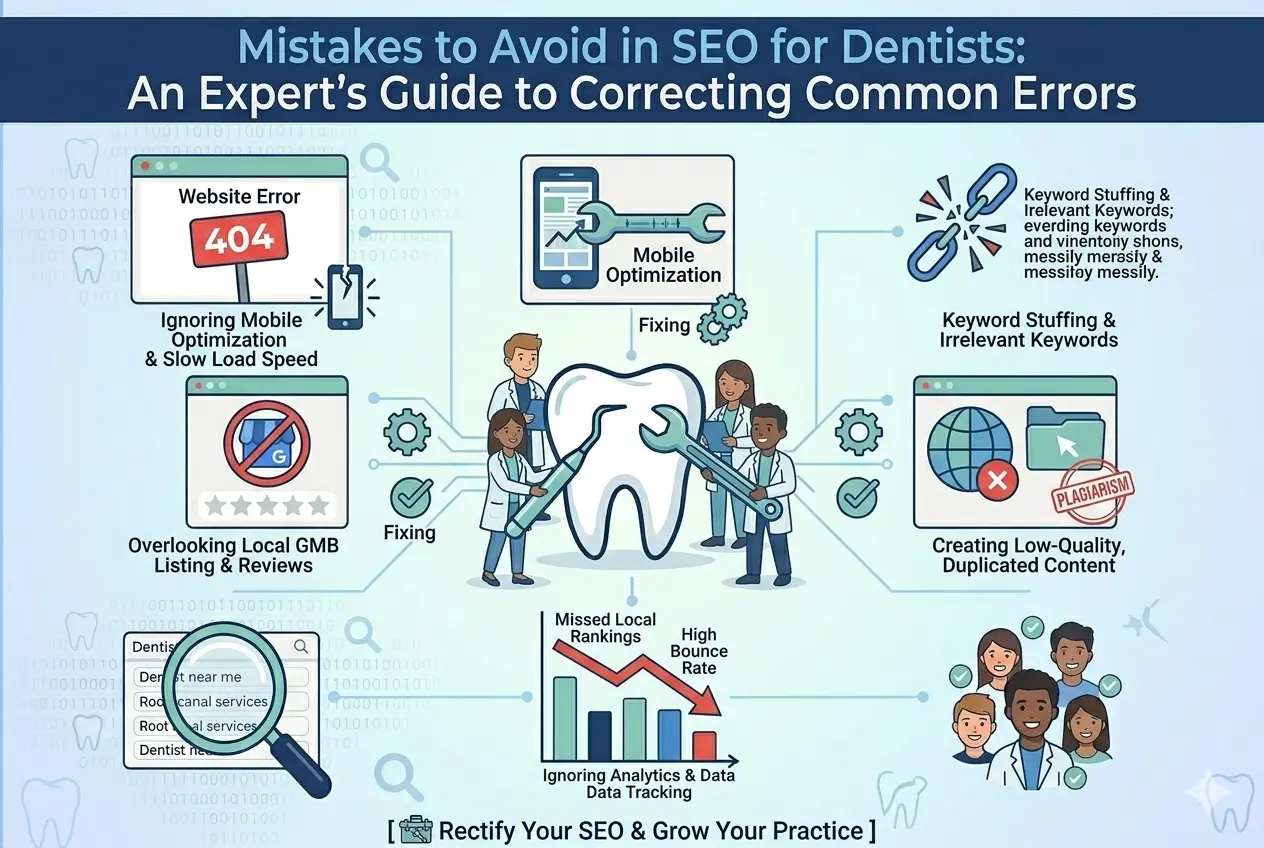
Mistakes to avoid in SEO for dentists
There are a few recurring mistakes that show up on underperforming dental websites.
- Using one generic page for all treatments. Patients and search engines both need clarity.
- Publishing location pages with copied text. Thin geographic pages usually do not age well.
- Ignoring reviews and trust content. Rankings alone do not book appointments.
- Writing blogs with no conversion path. Informational content should support service demand.
- Overusing exact-match keywords. Natural language performs better for real users.
- Neglecting technical cleanup. Slow, messy sites make every other SEO effort less effective.
One common mistake is copying what a large dental chain does without considering the size of the actual clinic. A single-location practice does not need a bloated website. It needs a focused one.
How to measure whether dental SEO is actually working
Too many clinics judge SEO by one keyword screenshot. That is not enough. The better way is to track a small set of meaningful indicators.
- Organic traffic to service and location pages
- Google Business Profile actions such as calls and directions
- Rank visibility for treatment plus location queries
- Appointment form submissions and phone leads
- Click-through rate from search results
- Growth in reviews and branded searches
In real SEO workflows, the healthiest sign is not always a spike in traffic. It is often better-quality traffic. A smaller increase in visitors who actually book is worth more than a broad increase in low-intent blog sessions.
When dentists should use SEO tools instead of guessing
There is no prize for doing SEO blindly. The smarter approach is to use data where it saves time or reveals gaps you would miss manually.
For example, you can use competitor keyword discovery to see which treatment terms other clinics rank for, then compare that with your existing service pages and blog coverage. You can use technical tools to catch missing metadata, weak headings, or crawl issues before they become persistent problems.
If you want to build your dental SEO stack gradually, start with visibility, page quality, and technical cleanup. Fancy reporting comes later. What matters first is whether your core pages deserve to rank and whether users can trust what they find.
If you are ready to test gaps across service pages, supporting topics, and search intent, you can create a free account and run the first checks without overcomplicating the process.
Frequently Asked Questions
How long does SEO for dentists usually take?
It depends on competition, website quality, and whether the clinic already has local authority. In many cases, meaningful movement starts within a few months, but stronger compounding results take longer. Competitive implant or cosmetic terms can take more work than general service queries.
Is local SEO enough for a dental clinic?
For many clinics, local SEO is the main growth driver, but not the whole picture. Strong service pages, review strategy, content support, and technical quality still matter. Local rankings are usually best when those pieces work together.
Should dentists blog regularly?
Yes, but only if the topics are useful and strategically connected to services. Publishing filler content every week is not a good plan. Publishing fewer, stronger articles tied to patient intent is usually the smarter choice.
What is the most important page on a dental website for SEO?
There is rarely just one. The homepage matters for brand and local trust, but high-intent service pages often drive the most valuable organic conversions. Emergency, implants, cosmetic, orthodontic, and family dentistry pages are common priorities depending on the practice.
Can SEO help a new dental clinic compete with established practices?
Yes, especially in local search where relevance, trust, reviews, and page quality can narrow the gap. A new clinic may not outrank older competitors immediately, but a focused local-first strategy can create opportunities faster than many owners expect.
Do dentists need separate pages for each treatment?
Usually yes. Separate pages help clarify intent, improve targeting, and answer patient-specific questions. Combining many treatments on one page often weakens both relevance and conversion.
Are backlinks important for dental SEO?
They still matter, but quality matters more than volume. Relevant citations, local mentions, and trustworthy links help more than random low-quality directory submissions.
Final thoughts: the best dental SEO strategy is the one patients can actually use
Good SEO for dentists is rarely flashy. It is clear service architecture, strong local relevance, trust-building content, sensible internal links, and a technically clean site. That combination is what turns search visibility into real patient demand.
If your clinic site already has decent design but weak performance, start with the essentials: service pages, local optimization, reviews, internal linking, and technical cleanup. That is where most underperforming dental websites have the biggest room to improve.
Ready to improve your dental SEO workflow?
If you want a practical way to find keyword gaps, competitor opportunities, and technical issues without guessing, explore SerpX and review the pages that matter most first. You can start with the pricing page or create an account and begin testing your dental site against real search opportunities.
Apply these ideas with SerpX tools
Turn insights into action with practical workflows for keyword research, competitor analysis, backlink review, and SEO planning.