Technical SEO Guide: Complete Checklist for Better Rankings
A complete technical SEO checklist to improve crawling, indexing, and performance. Learn how to fix critical issues and boost rankings step-by-step.
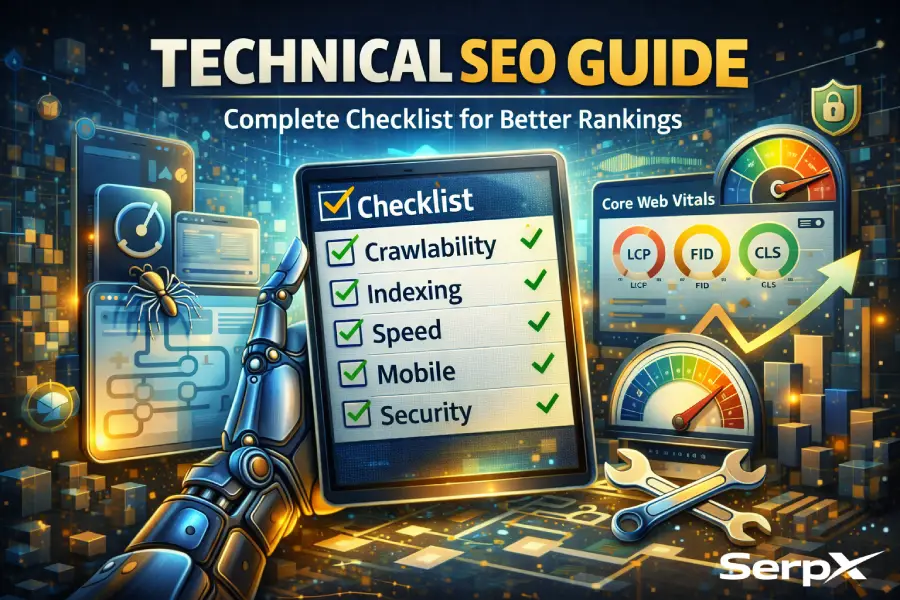
Technical SEO Guide: Complete Checklist for Better Rankings
Technical SEO is the foundation of every high-performing website. Without it, even the best content and strongest backlinks can fail to rank. In this guide, you’ll learn how to identify, prioritize, and fix technical SEO issues that directly impact your visibility in search engines.
In real SEO workflows, most ranking problems are not about content—they’re about crawlability, indexation, and performance. This is where technical SEO becomes critical.
What Is Technical SEO?
Technical SEO refers to optimizing your website’s infrastructure so search engines can crawl, index, and understand your content efficiently.
- Improving crawlability
- Fixing indexation issues
- Enhancing website speed
- Ensuring mobile usability
- Structuring data correctly
If search engines cannot properly access your pages, ranking becomes nearly impossible.
Why Technical SEO Matters for Rankings
This matters because search engines prioritize websites that are fast, accessible, and easy to understand.
- Faster websites rank better
- Clean architecture improves crawl efficiency
- Proper indexing ensures pages appear in search
- Core Web Vitals affect user experience signals
Even small technical fixes can lead to measurable ranking improvements.
Technical SEO Checklist (Step-by-Step)
1. Crawlability
- Ensure robots.txt is not blocking important pages
- Fix broken internal links
- Maintain clean URL structures
2. Indexation
- Check indexed pages in Google Search Console
- Remove duplicate content issues
- Use canonical tags correctly
3. Website Speed
- Optimize images
- Reduce JavaScript execution
- Enable caching
4. Mobile Optimization
- Responsive design
- Readable fonts
- Proper spacing
5. Site Structure
- Logical hierarchy
- Internal linking strategy
- Clean navigation
Technical SEO vs On-Page SEO
| Factor | Technical SEO | On-Page SEO |
|---|---|---|
| Focus | Infrastructure | Content & Keywords |
| Impact | Crawling & Indexing | Relevance |
| Examples | Speed, Sitemap, Robots | Headings, Keywords |
How to Run a Technical SEO Audit
In practice, a technical audit should be systematic and repeatable.
- Scan your site with an SEO crawler
- Identify crawl errors
- Analyze page speed issues
- Check indexing status
- Fix prioritized problems
You can simplify this process using a technical SEO analysis tool to detect issues automatically.
Common Technical SEO Mistakes to Avoid
- Blocking important pages via robots.txt
- Duplicate content without canonical tags
- Slow loading pages
- Broken internal links
- Ignoring mobile usability
One common mistake is focusing only on content while ignoring technical problems that prevent pages from ranking.
Core Web Vitals Optimization
Core Web Vitals measure real user experience.
- LCP: Loading performance
- FID: Interactivity
- CLS: Visual stability
Improving these metrics can directly influence rankings and conversions.
Internal Linking & Technical SEO
Internal links help search engines discover pages faster.
For example, linking your pages to tools like backlink checker or keyword gap analysis improves crawl paths and relevance.
You can also strengthen your SEO by connecting related topics such as keyword gap analysis strategies and competitor keyword research.
Technical SEO for Large Websites
- Use XML sitemaps effectively
- Optimize crawl budget
- Implement pagination properly
- Reduce duplicate pages
Large websites require structured and scalable SEO systems.
Mid-Article CTA
If you want to quickly identify technical SEO issues, start using SerpX technical tools to analyze your website and fix errors faster.
Advanced Technical SEO Strategies
Log File Analysis
Understand how search engines crawl your site.
JavaScript SEO
Ensure content is accessible without heavy rendering delays.
Structured Data
Help search engines understand your content better.
Checklist Summary
- Fix crawl errors
- Improve page speed
- Optimize mobile usability
- Ensure proper indexing
- Strengthen internal linking
Frequently Asked Questions
What is technical SEO?
Technical SEO focuses on optimizing website infrastructure for better crawling and indexing.
How often should I run a technical audit?
At least once a month or after major updates.
Does technical SEO improve rankings?
Yes, it directly impacts how search engines access and rank your pages.
What tools help with technical SEO?
SEO crawlers, performance tools, and platforms like SerpX can automate analysis.
Is technical SEO difficult?
It can be complex, but following a checklist simplifies the process.
Final Thoughts
Technical SEO is not optional—it’s essential. Without it, your content may never reach its full ranking potential.
If you're serious about improving your rankings, start by fixing your technical foundation.
Start Optimizing Today
Create your free account and begin improving your website with SerpX SEO tools. Identify issues, fix them quickly, and unlock better rankings.
Apply these ideas with SerpX tools
Turn insights into action with practical workflows for keyword research, competitor analysis, backlink review, and SEO planning.