AI Content Optimization: How to Rank Faster with Smart Automation
Learn how AI content optimization helps you rank faster by automating SEO workflows, improving content quality, and targeting search intent with precision.
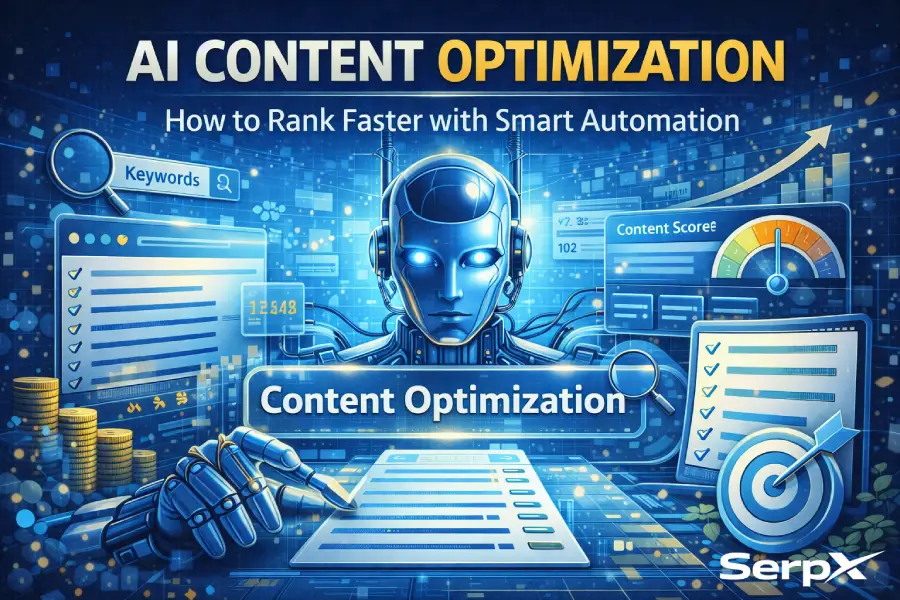
AI Content Optimization: How to Rank Faster with Smart Automation
AI content optimization has quickly become one of the most effective ways to accelerate SEO results. Instead of relying solely on manual workflows, modern teams use automation to analyze search intent, improve on-page structure, and scale content production without sacrificing quality.
This isn’t about replacing human writing. In practice, it’s about enhancing decision-making — using AI to identify opportunities faster, optimize smarter, and compete in crowded SERPs with less effort.
What Is AI Content Optimization?
AI content optimization refers to using artificial intelligence to improve how content is created, structured, and aligned with search engine ranking factors. It combines data analysis, automation, and semantic understanding to enhance SEO performance.
- Keyword intent analysis
- Content gap detection
- Semantic keyword expansion
- On-page optimization recommendations
- Content scoring and improvement
This matters because traditional SEO workflows are slow and often based on guesswork. AI replaces that with data-driven precision.
Why AI Helps You Rank Faster
Speed in SEO comes from two things: execution and accuracy. AI improves both.
1. Faster Keyword Discovery
Instead of manually researching keywords, tools can instantly identify long-tail opportunities. For example, using a keyword gap analysis tool helps uncover keywords your competitors rank for but you don’t.
2. Better Search Intent Matching
AI can analyze top-ranking pages and detect whether a query is informational, transactional, or navigational — allowing you to align content correctly.
3. Continuous Optimization
Content is no longer static. AI enables ongoing updates based on ranking changes and competitor movements.
Traditional SEO vs AI Content Optimization
| Aspect | Traditional SEO | AI Optimization |
|---|---|---|
| Keyword Research | Manual & slow | Automated & data-driven |
| Content Updates | Occasional | Continuous |
| Scalability | Limited | High |
| Accuracy | Experience-based | Data-backed |
In real SEO workflows, teams that adopt AI gain a clear advantage in both speed and consistency.
Core Components of AI Content Optimization
Keyword Intelligence
AI identifies not just keywords, but clusters and relationships between them. Tools like the competitor keyword tool reveal hidden opportunities.
Content Structure Optimization
AI suggests heading structures, internal linking, and content flow based on top-ranking pages.
Semantic SEO
Instead of repeating keywords, AI expands content with related entities and context.
Performance Tracking
Automated systems monitor rankings and suggest improvements in real time.
How to Use AI for Content Optimization (Step-by-Step)
- Identify your primary keyword and search intent
- Analyze competitors using tools
- Generate a structured outline
- Write high-quality human content
- Optimize using AI suggestions
- Publish and track performance
For deeper strategy, check our AI SEO guide.
Checklist for AI-Optimized Content
- Clear search intent alignment
- One main keyword + semantic variations
- Structured headings (H1, H2, H3)
- Internal linking strategy
- Optimized meta title and description
- Readable and engaging content
Common Mistakes to Avoid
- Over-relying on AI-generated text without editing
- Keyword stuffing instead of semantic writing
- Ignoring user intent
- Publishing without internal links
- Not updating content over time
One common mistake is treating AI as a shortcut instead of a tool. The best results come from combining automation with human expertise.
Internal Linking Strategy with AI
AI helps identify where to link internally for maximum SEO impact.
- Link to related blog posts like keyword gap analysis
- Connect to tools naturally within context
- Use descriptive anchor text
This improves crawlability and distributes authority across your site.
Mid-Article CTA
If you want to automate your SEO workflow, try using SerpX tools to analyze competitors, find keyword gaps, and optimize content faster.
Advanced AI Optimization Techniques
Content Clustering
Group related articles into clusters to build topical authority.
Entity-Based Optimization
Focus on concepts and relationships instead of just keywords.
Automated Content Refresh
Update existing pages based on ranking changes and new data.
Frequently Asked Questions
What is AI content optimization?
It’s the process of using AI tools to improve content quality, structure, and SEO performance.
Does AI content rank on Google?
Yes, as long as it’s helpful, original, and aligned with user intent.
Is AI better than traditional SEO?
It’s not a replacement — it’s an enhancement that improves speed and accuracy.
How often should I optimize content?
Continuously. AI allows ongoing improvements based on data.
Can beginners use AI SEO tools?
Yes, most tools are designed to simplify complex SEO tasks.
Final Thoughts
AI content optimization isn’t a trend — it’s a shift in how SEO works. Teams that adopt it early gain a major competitive edge by moving faster and making smarter decisions.
Get Started with Smart SEO Automation
Ready to rank faster? Use SerpX to automate keyword research, analyze competitors, and optimize your content strategy.
Apply these ideas with SerpX tools
Turn insights into action with practical workflows for keyword research, competitor analysis, backlink review, and SEO planning.