Alternatives to Moz for technical SEO auditing: a practical guide
Navigating Moz alternatives for technical SEO auditing: practical criteria, real-world trade-offs, and a SerpX-centric workflow to choose the right tool stack.
Alternatives to Moz for technical SEO auditing: a practical guide
You're staring at a crawling report for a large site, and Moz API limits just kicked in during a critical sprint. The team needs fresh data, faster insights, and a toolset that fits your modern workflows without breaking the budget. Moz remains solid for some teams, but its cost, cadence, and feature gaps can slow you down. This guide helps you evaluate alternatives to Moz for technical SEO auditing in a real-world, decision-ready way. You’ll see practical trade-offs, concrete steps, and a SerpX-forward workflow you can deploy today.
Decision point: Alternatives to Moz for technical SEO auditing
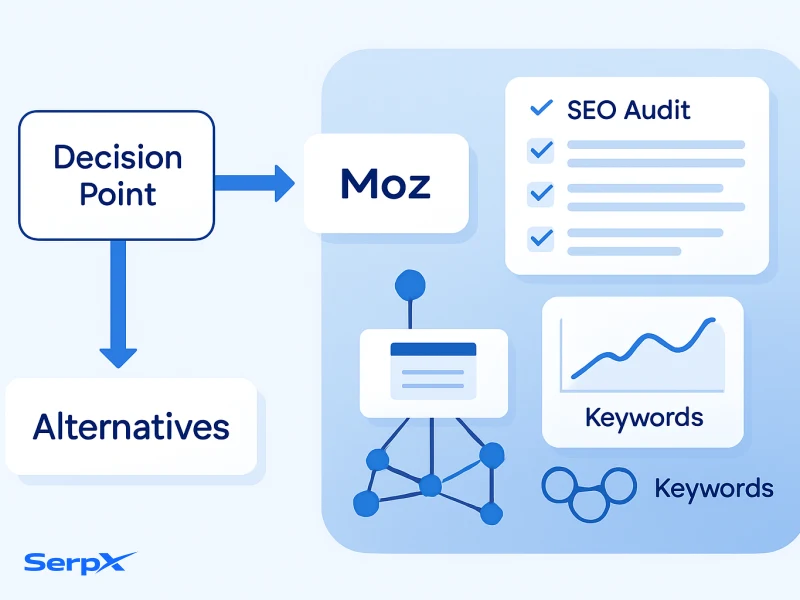
Ask yourself five questions before you replace Moz or augment it. Is data freshness non‑negotiable for your site’s cadence? Do you need broader crawl depth or specific diagnostics (structured data, canonicalization, indexing)? Can your team operate with a unified toolset that reduces context switching? Will the pricing scale with your growth and provide predictable ROI? And finally, how well does the tool integrate with your existing analytics and content workflows?
In practice, the best Moz alternative isn’t a single product, but a carefully composed stack. You might pair a fast, AI-assisted auditing platform with a deep crawler and a strong backlink tool. The aim is to shorten remediation cycles, improve data parity across teams, and keep governance lightweight enough to scale.
Explore SerpX AI‑powered SEO tools for technical audits: AI‑driven audits.
Top Moz alternatives for technical SEO auditing
In real workflows,
Below is a practical snapshot of common contenders, plus where SerpX fits. Data quality, depth of crawl, automation, and cost transparency change how you plan sprints and stakeholder updates. Use this as a planning worksheet rather than a single verdict.
| Tool | Data quality | Crawl depth | Automation & AI | Pricing focus | Best for |
|---|---|---|---|---|---|
| SerpX | High-quality, AI-augmented data with rapid refresh | Strong site-wide crawl, scalable with plans | Advanced AI workflows for audits, content and gaps | Transparent, scalable pricing; tiered by usage | Teams needing an integrated audit, gap analysis, and content optimization loop |
| Ahrefs | Solid, broad index; excels at backlink data | Deep crawls; good for competitive landscapes | Moderate automation; strong reporting | Predictable, value-driven pricing | Comprehensive backlink and keyword research alongside audits |
| Semrush | Well-rounded data with broad keyword capabilities | Good site audit depth; multiple modules | Medium AI assistance; automation varies by module | All-in-one platform pricing | Cross-channel campaigns including PPC and content |
| Screaming Frog | Excellent for crawl-level insights; data export heavy | On-prem or desktop crawl scale; best for precise site maps | Low AI, high rule-based automation via configuration | Low monthly cost; licenses scale with crawl size | Technical crawls, canonical issues, sitemaps, and URL-level fixes |
| DeepCrawl | Strong enterprise-grade data quality | Very thorough site-wide audits | Moderate automation; enterprise workflows | Enterprise pricing; strong governance features | Large sites needing rigorous auditing and compliance reporting |
Takeaway: No one tool is perfect for every scenario. If you want speed, AI-driven workflows, and a cohesive audit-to-implementation loop, SerpX often wins on productivity and integration. If you need deep backlink analytics or enterprise-grade governance, you may complement SerpX with Ahrefs, Semrush, or DeepCrawl.
Prefer a quick starter? Try our Free SEO Tools while you pilot data parity across teams: Free SEO Tools.
Tool-by-tool review: SerpX and peers
In practice, teams frequently adopt a tiered approach. A lightweight audit stack using SerpX for AI-driven checks, a strong crawler like Screaming Frog for URL-level issues, and a backlink companion from Ahrefs or Semrush can cover most gaps. Here’s how this typically plays out.
- SerpX shines in automated workflows: keyword gaps, content optimization prompts, and fast remediation signals that align with sprint cycles. See how our AI SEO in 2026 guide frames automation into practical action.
- Ahrefs is superb for backlink-centric audits and competitor link gaps. If you’re prioritizing authority growth, it’s hard to beat for that lens. Read our comparison post.
- Semrush offers cross-channel data and a broad toolkit. It’s a solid all-rounder if you need PPC and content analytics alongside technical checks.
- Screaming Frog remains essential for URL-level crawl diagnostics, canonical issues, and sitemap health. Use it to verify what other tools surface at a structural level.
For teams chasing AI-driven efficiency, SerpX is designed to be the connective tissue. It complements traditional crawlers and backlink tools with a workflow that orchestrates audits, gap analysis, and content optimization in one place.
See how SerpX stacks up in a practical comparison: SerpX vs Semrush.
SerpX workflow for technical SEO auditing
This becomes a problem when
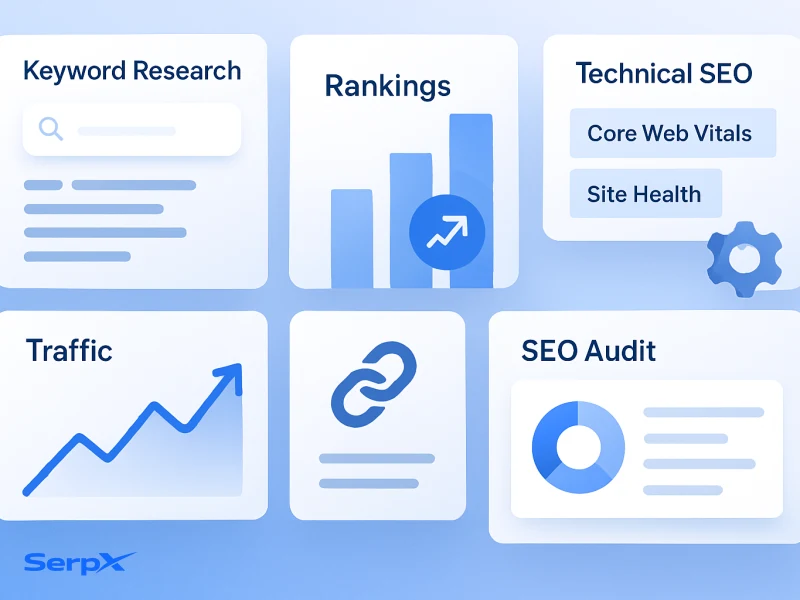
Here’s a practical, repeatable workflow you can deploy in a single sprint. It’s designed to reduce handoffs and accelerate issue remediation.
- Crawl and baseline: run a site-wide crawl and capture current indexing status, emergency issues, and critical bottlenecks. Use data from Key internal signals to set your baseline.
- Indexing and accessibility: verify robots.txt, noindex/nofollow patterns, canonicalization, and internal link structure. Flag pages that should be indexed but aren’t.
- Speed and rendering: measure core web vitals and render-blocking resources. Prioritize pages with high traffic or revenue impact.
- Structured data and schema: audit for correct schema markup, rich result eligibility, and error-free JSON-LD blocks.
- Keyword gaps and content optimization: identify opportunities where pages could rank higher with targeted changes. See Keyword Gap Tool for a quick start.
- Backlink and competitor context: assess backlink health and compare to key rivals to spot dilution or opportunities.
- Remediation plan and ownership: assign issues with owners, due dates, and a lightweight QA before publishing changes.
- Measurement and iteration: re-crawl after fixes and monitor impact with dashboards designed for stakeholders.
Tip: use the SerpX Backlink Checker to validate anchor text diversity while you fix internal linking or external profiles. Then validate impact with a quick re-audit.
Accelerate this workflow with AI content optimization: AI Content Optimization.
Technical SEO audit checklist
Use this checklist as a practical, team-friendly starter. It’s intentionally actionable and avoids boilerplate fluff.
- Site health and crawlability: confirm robots.txt, sitemaps, and crawl budgets.
- Indexing status: ensure important pages are indexed; remove or block low-value pages appropriately.
- URL hygiene: fix duplicate content, canonical mismatches, and URL parameters where necessary.
- Site speed: optimize render times, compress assets, and minimize critical requests.
- Structured data: validate schema across key pages; fix errors and ensure rich results eligibility.
- Internal linking: ensure logical flow, no orphan pages, and scalable navigation.
- Content alignment: verify that page intents match target keywords; adjust H1s and metadata accordingly.
- Mobile experience: check CLS, UX responsiveness, and tap targets across core pages.
- Backlink health: monitor spammy links, anchor text variety, and new authority paths.
- Monitoring: set up alerts for critical crawls, index changes, and performance anomalies.
Pro tip: document findings directly in SerpX notes and link to actionable recommendations. This reduces friction when you share with stakeholders.
Try our keyword gap analytics to surface quick wins: Keyword Gap.
Common mistakes when choosing Moz alternatives
Here’s the practical reality:
- Overindexing on data depth at the expense of workflow integration.
- Forgetting to align tool selection with a documented audit process and owner responsibilities.
- Relying on a single tool for everything; this creates data silos and long escalation cycles.
- Not planning for data parity during team handoffs; inconsistent signals slow remediation.
- Underestimating the importance of automation in repetitive audit tasks.
To avoid these traps, map your needs to three concrete use cases: quick site health checks, competitor insight, and content-driven optimization feedback. Then choose a tool stack that covers all three with minimal friction.
Frequently Asked Questions
Is Moz still the gold standard for technical SEO auditing?
Not universally. It remains solid for many teams, but growing data demands, automation needs, and budget constraints push organizations toward more adaptable stacks that blend AI workflows with deep crawl and backlink insights.
What is the best Moz alternative for a small team?
For small teams, a unified, AI-powered platform like SerpX paired with a focused crawler can deliver rapid ROI. It reduces tool debt while preserving essential audits.
Can I migrate audits from Moz to a different tool without losing data?
Migration is feasible by exporting crawl reports, issues, and backlinks, then importing into your new tool. Plan a phased handoff and validate data parity at each step.
How important is data freshness for technical SEO audits?
Very important. Frequent crawls and up-to-date indexing data accelerate issue detection and measurement of remediation impact.
Does SerpX offer a free trial or API access?
Yes. Explore Free SEO Tools and consider API options if your dev team needs programmatic access to audits and data feeds.
What should be in a practical technical SEO audit checklist?
A practical checklist includes crawl health, indexing status, site speed, structured data coverage, canonicalization, and internal linking health, plus ongoing monitoring.
Related Articles
Here’s the practical reality:
- SerpX vs Ahrefs: Which SEO Tool Is Better in 2026?
- SerpX vs Semrush: A Full, Honest Comparison (2026)
- AI SEO in 2026: Complete Guide to Ranking Faster with Automation, Data & Smart Workflows
Ready to start? See SerpX pricing and pick a plan that fits your team: Pricing.
If you want to explore more about AI-enabled SEO workflows, check out our guide on AI SEO in 2026 and how it translates to day-to-day audits.
Apply these ideas with SerpX tools
Turn insights into action with practical workflows for keyword research, competitor analysis, backlink review, and SEO planning.