Best Semrush alternatives for SaaS startups 2026
For SaaS teams seeking scalable growth, Semrush isn’t the only path. This guide compares practical alternatives for 2026, with workflows, trade-offs, and actionable next steps.
Best Semrush alternatives for SaaS startups 2026
You’re a growth-minded SaaS founder trying to scale without governance friction. Semrush is powerful, but its breadth can be overkill for a lean product-led team, and the pricing can slow down experimentation. The real question isn’t “is Semrush perfect?” but “which tool fits our 2026 reality—speed, AI-driven workflows, and a clear path to ROI?” This guide helps product-led SaaS startups evaluate practical Semrush alternatives, rank them against real-work needs, and map a sane, testable adoption plan.
Decision Point: What you actually need from an SEO tool for a SaaS startup
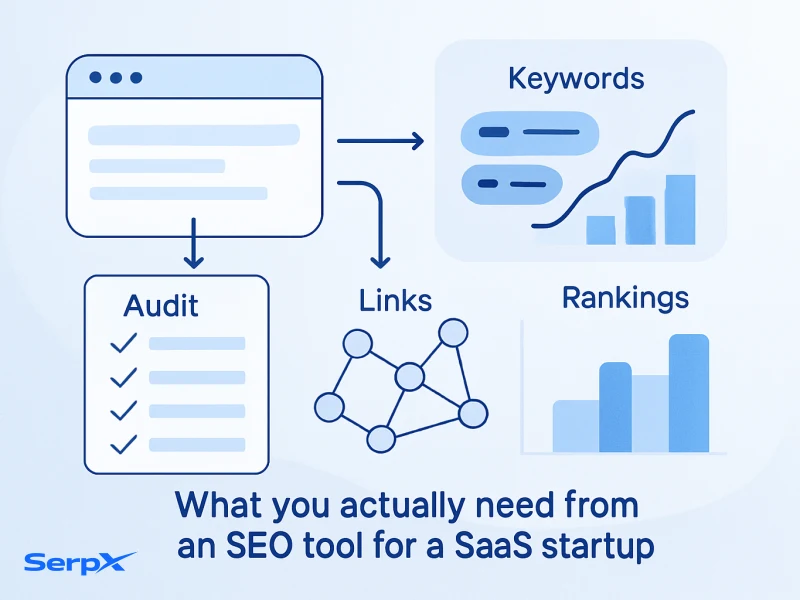
Before you compare feature lists, anchor your choice to measurable outcomes. Ask these questions:
- Do you need AI-assisted keyword research that scales with new product launches?
- Is content optimization tied to product pages, onboarding flows, or feature updates?
- Do you require automated site health checks and faster issue remediation for fast releases?
- Will you benefit from competitive intel that aligns with your pricing and go-to-market motion?
- What is your budget ceiling, and how will you justify ROI in the first 90 days?
For SaaS teams, velocity and signal quality beat sheer data volume. You’ll want a tool that integrates with your product analytics and content workflows, not just a dashboard with 500 metrics. If your team values automation, AI-driven briefs, and seamless collaboration, that should drive your short-list decisions.
To get a quick read on fit, skim the SerpX vs Semrush comparison and then compare against classic data strengths like backlink depth, keyword coverage, and auditing cadence.
Top contenders in 2026: practical peers to Semrush
From an SEO operations perspective,
Below is a concise comparison of options SaaS teams commonly evaluate. It emphasizes practical fit for startups focusing on AI-enabled workflows, speed, and cost control.
| Tool | Best For SaaS | Key Strengths | Pricing snapshot | Not the best fit for |
|---|---|---|---|---|
| SerpX | AI-driven SEO workflows for startups | Automation, AI keyword research, content optimization, product-analytics integration | Tiered plans with modular add-ons | Large enterprise-scale, heavy custom reporting |
| Ahrefs | Competitive analysis and backlink depth | Strong link index, comprehensive keyword data | Mid-to-high pricing | Overwhelming for small teams seeking fast wins |
| Moz Pro | Ease of use for growing teams | User-friendly audits, clear recommendations | Moderate pricing, predictable | Data depth may be lighter than top rivals |
| SE Ranking | All-in-one on a budget | Affordable, good for small teams, decent automation | Lower price ceiling | Some data gaps compared with premium tools |
| Ubersuggest | Starter projects and fast wins | Affordability, approachable UI | Low to mid pricing | Deeper enterprise-grade needs may outgrow it |
For a direct, practical view, consider SerpX vs Ahrefs and SerpX vs Semrush: A Full, Honest Comparison to see real-work workflows beyond feature-checklists.
Why SerpX can be a practical edge for 2026
SerpX isn’t just a data sink. It’s an execution platform designed for SaaS teams shipping frequent product updates. The AI-assisted keyword research and content optimization flows are built to plug into your product-led growth model. You’ll often see faster iteration cycles when your briefs, content drafts, and updates are tightly aligned with in-app signals and conversion goals.
Best for: teams who want measurable, fast experiments, automated workflows, and a platform that scales with product velocity. Not best for: teams needing exhaustive, enterprise-grade reporting with hundreds of custom dashboards that require a dedicated data engineering team.
Pro tip: pair SerpX with the Competitor Keyword Research Tool to surface not just what competitors rank for, but where your product can win with targeted feature pages and onboarding hints.
In practice, you’ll see better ROI when you frame SEO as a product experiment: define a hypothesis, set a KPI (like qualified organic trials), and run a 4–8 week test with AI-assisted content briefs and automated updates.
Pricing, value, and ROI: making the math work
In real workflows,
ROI from SEO tooling hinges on adoption speed and workflow alignment. A useful heuristic is to allocate a percentage of your growth experiments budget toward SEO tooling and measure the incremental qualified trials generated per dollar spent. If the tool accelerates product-led experiments by enabling faster content iteration, more precise keyword targeting, and quicker site fixes, the payback is usually visible within a quarter.
Start with a dry run: a 30-day test focused on one core product area, such as onboarding content and feature pages. Track changes in organic signups, time-to-first-positive-action, and content engagement. If you hit your target, scale up the spend or iterate on additional product areas.
Prices and plans change. For a clear view of how SerpX fits cost-to-benefit, visit the Pricing page and cross-check with the tools you already use: Pricing and Free SEO Tools to pilot risk-free experiments.
SerpX workflow: a practical, repeatable process
Here’s a pragmatic, repeatable sequence you can run this quarter to validate SerpX as a Semrush alternative for your SaaS product:
- Define product goals and pages to optimize. Map top trial-landing pages, onboarding screens, and feature pages where organic traffic can lift conversions.
- Run AI-assisted keyword research. Generate a prioritized keyword list aligned with user intent and product goals. Use the AI Briefs to guide content updates.
- Create content briefs and briefs-to-drafts. Build briefs for each page with intent signals, and let SerpX's automation draft or optimize content accordingly.
- Audit and fix technical issues in cadence. Use automated checks to surface crawl/indexing issues that block content visibility.
- Publish, monitor, and iterate. Track rankings, traffic, and conversion signals; iterate content and optimization weekly.
Tip: cross-link to your product pages with contextual keywords to improve signal; this is where product-led SEO truly shines.
Supplementary reading: AI Content Optimization explains how automation accelerates this workflow.
Soft CTAs: AI SEO Tools for automation and Backlink Checker to monitor external signals as you scale.
Checklist: how to select the right Semrush alternative
That matters because
- Clear integration with product analytics and content workflows.
- Data quality, refresh cadence, and coverage for your core markets.
- Automation capabilities that actually save time (not just dashboards).
- Transparent pricing with predictable ROI, including trial options.
- strong onboarding and responsive support tailored to startups.
- Compatibility with your content tooling and CMS.
Use this as a decision framework during vendor calls; push for live demos focused on your top use cases (on-page optimization, content briefs, and product-edge keyword strategies).
Common mistakes to avoid when replacing Semrush
- Assuming broader data automatically means better outcomes; depth on your core segments matters more than breadth.
- Choosing a tool solely on the interface; you should test workflows and data accuracy with real pages.
- Underinvesting in onboarding, especially for AI-enabled features that require some setup.
- Ignoring how the tool fits your content velocity and product release cycles.
- Relying on vanity metrics (rank position) without tying to qualified traffic and downstream activation.
Frequently Asked Questions
From an SEO operations perspective,
Is SerpX a Semrush alternative?
Yes. For many SaaS teams, SerpX replaces or complements Semrush by delivering AI-powered keyword research, content automation, and product-aligned workflows that speed up experiments and reduce manual toil.
Can SerpX replace all features I use today?
It depends on your use case. If your primary need is AI-driven content optimization and rapid keyword iteration tied to product pages, SerpX can cover that well. For deeply specialized backlink data or enterprise-scale dashboards, you may complement with other tools or use SerpX to augment and automate.
How do I measure ROI from an SEO tool?
Link SEO activity to business metrics like qualified trials, activation rate, and LTV. Run a 4–8 week pilot with a defined hypothesis (e.g., improve onboarding page rankings to lift free-trial conversions) and track changes in conversions and organic traffic.
What is AI SEO, and is it essential for SaaS in 2026?
AI SEO combines data-driven keyword research, automated content optimization, and intelligent workflows. For fast-moving SaaS startups, AI-enabled SEO typically reduces cycle times and increases experiment throughput.
How often should I audit SEO data?
Run a lightweight daily health check and a deeper audit weekly. Critical sections (indexing, core pages, and onboarding funnels) deserve a more frequent cadence during rapid product releases.
Where should I start with pricing?
Start with a pilot plan and a 30-day trial that targets your top three pages. Use the results to forecast ROI and determine if a scalable plan is justified as you expand.
Apply these ideas with SerpX tools
Turn insights into action with practical workflows for keyword research, competitor analysis, backlink review, and SEO planning.