Most accurate keyword gap analysis tool 2026: Practical guide
Identify missing keywords with precision in 2026. A practical guide to choosing the most accurate keyword gap analysis tool and turning gaps into actionable growth.
Most accurate keyword gap analysis tool 2026
You’re building a content pipeline, but your keyword opportunities feel stuck in the noise. Competitors outrank on topics you didn’t even know to target, and your team spends hours chasing data that never aligns with intent. If you can’t trust the gap signals, you’re flying blind. This guide helps you separate signal from noise, pick the most accurate tool for 2026, and turn gaps into a proven content plan you can execute without endless meetings.
Pain point: you’re chasing gaps, not insights
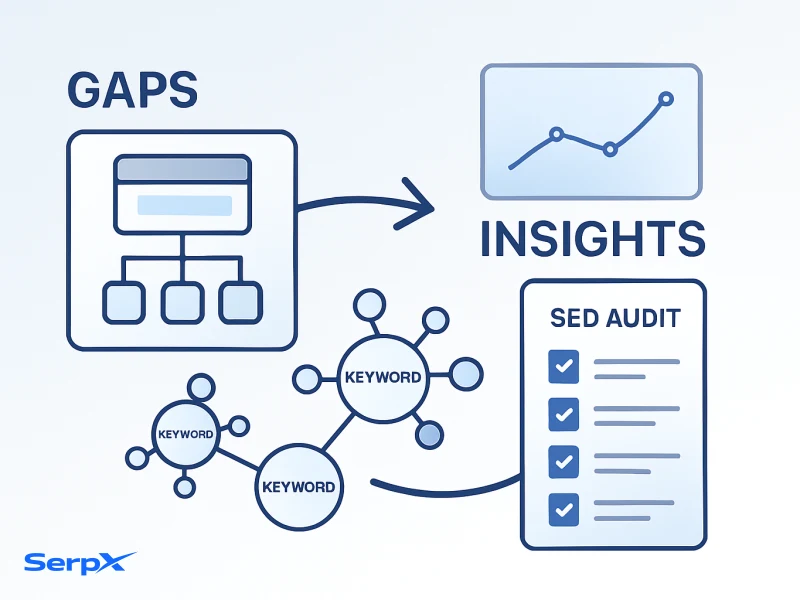
Many teams rely on single data sources or blunt metrics to identify keyword gaps. The result: misprioritized content, wasted effort, and missed opportunities on high-intent queries. A practical approach starts with accuracy in data signals, strong coverage of long-tail terms, and a workflow that translates gaps into action. In 2026, the most useful gap analysis blends fresh data, intent-aware grouping, and a repeatable process you can scale across products, blogs, and landing pages.
Practical primer: if you’re unsure whether your gaps are real opportunities or noise, read our primer on keyword gaps to ground your expectations. For hands-on guidance, see the Keyword Gap Analysis guide and then explore how SerpX supports these workflows.
Internal references you’ll find helpful:
- What Are Keyword Gaps? — fundamental concepts for beginners and veterans alike.
- Keyword Gap Analysis — a practical framework for uncovering missing opportunities.
- Keyword Gap Tool — the core engine for scanning competitor gaps.
What is keyword gap analysis and why accuracy matters
That matters because
Keyword gap analysis compares your site with competitors to reveal terms they rank for that you don’t. The goal isn’t just to add more keywords; it’s to prioritize gaps by intent, volume, and likelihood of conversion. Accuracy matters because noisy signals lead to content that ranks for the wrong intent or cannibalizes existing pages.
Key accuracy components to look for in 2026 tools:
- Data freshness: daily or even real-time updates reduce stale opportunities.
- Coverage breadth: healthy long-tail representation helps you find niche topics with lower competition.
- Intent signals: grouping by search intent (informational, navigational, transactional) improves prioritization.
- SERP feature awareness: understanding which keywords trigger features (featured snippets, people also ask, videos) to tailor content.
- Filtering and clustering: clean, scalable organization of keywords into topic clusters.
If you’re evaluating a tool, test a small set of competitors, pull 50–100 gaps, and sanity-check the top shifts against your analytics data. You should be able to answer: which gaps align with our content goals, and which ones are simply noise?
For a hands-on view, check how SerpX stacks up in real-world comparisons and see how our data sources feed gap results. For theoretical grounding, read the beginner guide on keyword gaps and then explore our comparison articles.
Try a live gap analysis
CTA: Explore the Keyword Gap Tool and start measuring gaps against your top competitors today. It’s a practical first step toward data-driven content plans.
What makes an accuracy-focused tool practical for 2026
Accuracy isn’t a single metric; it’s a multi-dimensional capability. Here’s how to judge a tool, not just by shallow numbers but by how well it supports your content strategy.
- Source diversity: a mix of search engines and regional data reduces bias. If your market is global, ensure the tool handles multiple languages and locales.
- Freshness controls: daily refreshes prevent long-tail keywords from going stale and help you spot new trends quickly.
- Intent-aware clustering: grouping by intent makes gaps actionable rather than just more keywords to chase.
- Quality signals: remove high-competition terms that aren’t realistic targets for your domain authority or budget.
- Auditability: transparency in data sources and scoring helps teams defend prioritization decisions with stakeholders.
In practice, a strong gap tool should let you export segments by topic and intent, then map those segments to content owners and delivery timelines. If you can’t explain why a gap exists or how to address it, you probably lack a practical workflow.
For readers seeking a broader context, see our AI SEO guides and the practical comparisons to popular platforms. If you want to see real-world usage, try the SerpX workflow described below.
SerpX workflow: practical steps to actionable gaps
One thing many teams miss:
This is where the math meets the plan. Here’s a practical, repeatable workflow you can implement this quarter.
- Define targets: pick 3–5 core topics aligned to your product pages and buyer personas.
- Collect competitor keywords: use the Competitor Keyword Research Tool to pull terms your rivals rank for and you don’t.
- Run gap analysis: run a complete keyword gap sweep against your domain to surface missing terms.
- Segment by intent: classify gaps into informational, navigational, transactional, and commercial investigations.
- Prioritize by impact: weigh volume, difficulty, and relevance to funnel stage.
- Plan content updates: map gaps to existing pages or new pages with a clear brief and owner.
- Publish and optimize: publish with on-page optimization and track SERP movement for wins and losses.
- Iterate weekly: refresh competitor data, re-prioritize, and align with product releases or campaigns.
Tip: Segmenting by buyer journey is more important than chasing high-volume keywords with low intent. Your best gaps are often mid-funnel topics that precede a conversion event.
What to do next: if you haven’t already, explore the Competitor Keyword Research Tool to start gathering the baseline data, then a fresh gap sweep with the Keyword Gap Tool.
Soft CTA: for a guided workflow, see our AI SEO Tools page and learn how automation supports these steps in 2026.
Checklist: 12 steps to a solid keyword gap strategy
- Define your primary business goals for the quarter.
- Identify 3–5 core topics to own in your niche.
- Collect competitor keywords for those topics.
- Run a comprehensive keyword gap analysis against your domain.
- Filter gaps by intent and potential impact on conversions.
- Create a content map linking gaps to pages or new assets.
- Draft briefs with target intent, recommended format, and KPIs.
- Prioritize tasks by impact and feasibility.
- Publish or refresh content with on-page optimization.
- Measure SERP movement and engagement metrics weekly.
- Iterate the cycle based on results and seasonality.
- Document lessons learned for future campaigns.
Important warning: don’t chase every gap in isolation. Some gaps are not worth pursuing due to competitive saturation or lack of relevance to your audience. Use intent and funnel data to prune aggressively.
Common mistakes to avoid when doing keyword gap analysis
This becomes a problem when
- Over-reliance on volume without considering intent or conversion potential.
- Ignoring search intent signals when clustering keywords.
- Taking data as gospel without validating with analytics and user behavior data.
- Assuming more keywords equal better results, quality and relevance matter more.
- Underestimating the value of updating existing pages to cover new gaps.
- Failing to assign owners and timelines, leading to stalled execution.
To keep execution sharp, pair gap outputs with a clear content brief and a published schedule. If you’re unsure about a gap’s value, small tests (pilot pages) can de-risk big bets.
Frequently Asked Questions
Frequently Asked Questions
Here’s the practical reality:
What is keyword gap analysis?
Keyword gap analysis compares your site to competitors to identify terms they rank for that you do not. The goal is to prioritize gaps by intent, potential traffic, and likelihood of conversions.
How do I measure the accuracy of a keyword gap tool?
Look for data freshness, multi-source coverage, and transparent clustering. Validate outputs by cross-referencing with your analytics data and by running small content tests to confirm ranking momentum.
Can a keyword gap tool replace manual analysis?
No. It accelerates discovery, but human judgment is essential for interpreting intent, seasonality, and strategic fit with your product roadmap.
How often should I run a gap analysis?
Baseline every quarter, with monthly check-ins during major product launches or campaigns. If you operate in a fast-moving niche, consider biweekly quick-refreshes.
Does SerpX offer a free trial?
Yes. You can explore our core gap analysis workflows and try the Keyword Gap Tool through the SerpX platform to validate fit before purchasing.
What is the difference between keyword gap and content gap?
Keyword gap focuses on opportunities for ranking terms, while content gaps look at the content you already have and identify missing depth, questions, or formats to satisfy user intent.
How does SerpX handle competitor data?
We pull data from multiple sources, apply intent-aware clustering, and present gaps within a collaborative workflow. For a detailed comparison, see our SerpX vs Semrush post or SerpX vs Ahrefs guide.
Related Articles
- What Are Keyword Gaps? — foundational concepts for identifying opportunities.
- Keyword Gap Analysis — practical steps to execute gaps in 2026.
- SerpX vs Semrush: A Full, Honest Comparison (2026) — how our approach stacks up on data and workflows.
Final call-to-action: Ready to put these practices into action? Start with SerpX’s Keyword Gap Tool and AI SEO Toolkit to implement the workflow above. If you’re evaluating options, compare SerpX against others in our detailed guides, or jump straight to pricing to get started today.
Soft CTAs throughout the article: • Explore AI SEO Tools for automated optimizations. • Review Free SEO Tools to bootstrap your testing. • See how SerpX compares to the competition in our SerpX vs Ahrefs and SerpX vs Semrush posts.
Get started today
In real workflows,
If you’re serious about turning gaps into growth, the quickest path is to register and explore pricing options. Or start with a free trial of our core Keyword Gap Tool and AI SEO Tools to validate the approach with your data.
Apply these ideas with SerpX tools
Turn insights into action with practical workflows for keyword research, competitor analysis, backlink review, and SEO planning.