Professional keyword gap tools for digital agencies
Discover practical approaches for using keyword gap tools to uncover opportunities, prioritize campaigns, and scale SEO workflows for digital agencies with SerpX.
Professional keyword gap tools for digital agencies
When you're managing SEO for multiple clients, the last thing you need is a blind spot in your keyword strategy. You know there are opportunities your clients miss—topics competitors rank for, long-tail angles you haven't mapped, and pages that could be improved with smarter optimization. The decision isn't whether to invest in a gap tool, but which one actually fits your agency's workflow and velocity.
In this guide, we walk through practical decision points, show how to read gap results, and demonstrate a lean SerpX workflow that blends data quality with automation. We'll also include real-world mini-scenarios so you can decide quickly which tool to push first.
Pain points for agencies evaluating keyword gap tools
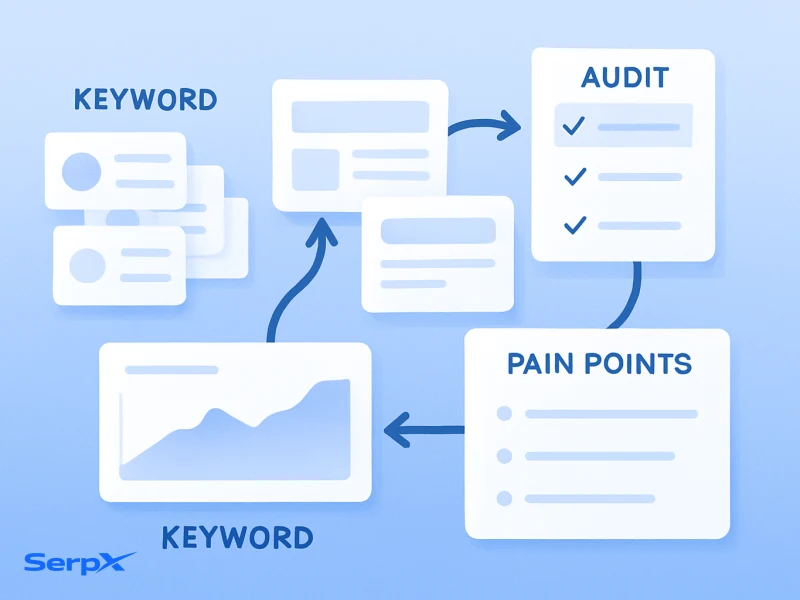
Agencies often juggle multiple clients, each with different niches, competitors, and content maturity. Traditional keyword research can churn out a large list that lacks context: what matters to your client, and what to prioritize first. Without a disciplined gap analysis, you risk chasing low-impact keywords or duplicating topics across domains.
Two practical decision problems frequently drive tool selection:
- How quickly can you surface high-potential gaps that align to client goals?
- How well does the tool integrate into your existing workflows (briefs, sprints, reporting, and dashboards)?
What keyword gap tools do and why they matter
This becomes a problem when
Keyword gap tools compare your current keyword footprint with competitors or market benchmarks, revealing missing topics, pages, and angles. They help you:
- Identify keywords your rivals rank for that you don’t
- Spot opportunities around product categories, intents, and topics
- Prioritize topics that can lift multiple pages or create new category authority
Begin with a simple mental model: gaps are not just random missing keywords; they’re signals of either content misalignment or untapped demand. For a deeper dive into the concept, see Keyword Gap Analysis.
Practical use cases for digital agencies
Consider a mid-size digital agency handling SaaS and e-commerce clients. A gap analysis reveals that several high-volume phrases like “best onboarding software” are missed on a suite of landing pages, while competitors have content clusters around “CRM for teams” that your client could outrank with better internal linking and updated content.
Use cases you can act on this quarter include:
- Optimizing landing pages to capture mid-funnel intent with crisp value propositions
- Creating long-tail topic clusters to support pillar pages
- Aligning content with buyer personas that are underserved in current blogs
To see how teams have reconciled gaps with content and technical improvements, check out the practical takeaways in AI SEO in 2026 for automation-friendly workflows.
Soft CTA: Explore SerpX Keyword Gap Tool to surface fast wins for your clients. Open the tool.
Choosing the right gap tool: trade-offs for agencies
One thing many teams miss:
No tool is perfect out of the gate. The right choice depends on your typical client mix, your team's bandwidth, and how you prefer to integrate data into briefs and dashboards. Here are common trade-offs to consider:
- Data quality vs. speed: do you need ultra-detailed analysis or quick heuristics to decide what to pursue first?
- Depth vs. breadth: are you prioritizing a few high-value topics or mapping broad topic neighborhoods?
- Integrations: do you need API access or direct connections to your analytics and CMS?
| Tool | Data Quality | Speed | Ease of Use | Integrations | Pricing signals |
|---|---|---|---|---|---|
| SerpX Keyword Gap Tool | High-quality, competitor-aligned signals | Fast for sprint cycles | Intuitive dashboards, guided workflows | AI SEO Tools, API access | Plan-based, predictable |
| Competitor Keyword Research Tool | Strong competitor-grade coverage | Moderate pace with batching | User-friendly, role-specific views | Limited direct integrations | Mid-range to premium depending on data depth |
| Manual Gap Analysis (Spreadsheet) | Depends on source data quality | Slow, manual refresh | Requires setup and governance | None built-in | Low to free (team hours only) |
If you’re unsure where to start, a pragmatic approach is to pilot the SerpX tool in a single client sprint and compare results with a spreadsheet-based gap map. You’ll quickly see where automation yields the biggest ROI.
Soft CTA: Prefer a guided evaluation? See our AI-powered toolkit for how automation tightens gaps across teams.
SerpX workflow: end-to-end gap-to-content process
Below is a practical, repeatable workflow you can embed into your agency sprints. It keeps the data-to-action loop tight and minimizes back-and-forth with clients.
- Define client objectives and success metrics (traffic, conversions, or product-qualified leads).
- Run a baseline keyword gap analysis against 2–3 primary competitors using the Gap Tool.
- Drill into high-potential gaps with the Competitor Keyword Research Tool to understand intent and content gaps.
- Create a prioritized content plan: clusters, pillar pages, and supporting articles with clear briefs.
- Map gaps to internal linking and on-page optimizations to lift existing pages and create new assets.
- Automate reporting and dashboards with AI-assisted workflows so your team stays aligned.
In practice, you’ll want to tie gap findings to client KPIs—signups, trials, or renewals. For a strong technical foundation, pair gap work with Technical SEO Guide: Complete Checklist to avoid ranking friction.
Soft CTA: Try the Competitor Keyword Research Tool to compare your client’s position against top competitors. Launch it now.
Keyword Gap Tools Checklist
That matters because
- Clarify the client’s priority pages and purchase funnels.
- Choose 2–3 primary competitors for the gap comparison.
- Run both breadth and depth analyses to capture short- and long-tail opportunities.
- Annotate gaps with intent and content actions (update, create, consolidate).
- Assign owners and a 2-week sprint window for content experiments.
- Set up dashboards that reflect client goals and progress weekly.
- Validate with analytics: does traffic or form submissions actually rise post-optimization?
- Review and adjust the plan every sprint based on new data.
Common mistakes when using keyword gap tools
- Relying on a single data source for gap signals; always cross-check with a second perspective.
- Neglecting user intent—rankings alone don’t guarantee qualified traffic or conversions.
- Skipping content quality in favor of volume; better clustering often beats more pages.
- Ignoring technical blockers that prevent page indexing or visibility.
- Creating a large backlog of low-priority gaps that never get acted on.
Soft CTA: See how SerpX AI Content Optimization can automate topic ideation and improve content briefs. Read the guide.
Frequently Asked Questions
From an SEO operations perspective,
What is a keyword gap tool?
A keyword gap tool compares your current keyword footprint with competitors or market benchmarks to reveal missing opportunities and content ideas you can pursue.
When should an agency use a gap-tool vs manual analysis?
Use a gap tool when you need speed, scalability, and repeatable insight. Manual analysis helps validate signals, interpret intent, and tailor outputs for specific clients.
Can gap analysis improve ROI for SaaS clients?
Yes. By surfacing high-intent keywords aligned to onboarding, pricing, and trial pages, you can drive targeted traffic that converts—especially when paired with strong content clusters.
What data sources should I trust for gap analysis?
Trust multiple sources (your own analytics, search data, and competitor data) and prefer tools that provide transparent data lineage and sampling controls.
How often should I refresh gap analyses?
Refresh quarterly or in response to major product updates, new competitors, or changes in buyer behavior. More frequent checks are sensible during growth phases.
Is SerpX enough for gap analysis, or should I pair it with other tools?
SerpX covers the core gap workflow, but pairing it with focused content and technical checks yields the best results.
Related Articles
- What Are Keyword Gaps? — Beginner Guide
- Competitor Keyword Research: High-Value Opportunities
- AI SEO in 2026: Complete Guide
Ready to take the next step? Explore SerpX pricing to choose a plan that fits your agency’s scale and client load. View pricing.
Final CTA: Start with a free trial or register today to unlock the Keyword Gap Tool and related AI workflows. Create an account.
Apply these ideas with SerpX tools
Turn insights into action with practical workflows for keyword research, competitor analysis, backlink review, and SEO planning.