SerpX AI vs Jasper: Which is better for SEO content?
A practical, experience-driven comparison of SerpX AI and Jasper for SEO content, focusing on workflow, optimization, and outcomes to help you choose wisely.

SerpX AI vs Jasper: Which is better for SEO content?
You’re responsible for a steady stream of content that actually earns traffic and qualified leads. Your team debates whether to keep using Jasper for draft generation or switch to SerpX AI, which promises SEO-focused workflows and built-in optimization. The decision isn’t about who writes better prose; it’s about who sustains rankings, scales content with search intent, and aligns with your SEO playbook. This guide cuts through the hype and gives you a practical framework to decide, with real-world scenarios, a clear comparison, and a concrete path to action.
Decision point: what you’re really choosing for SEO content
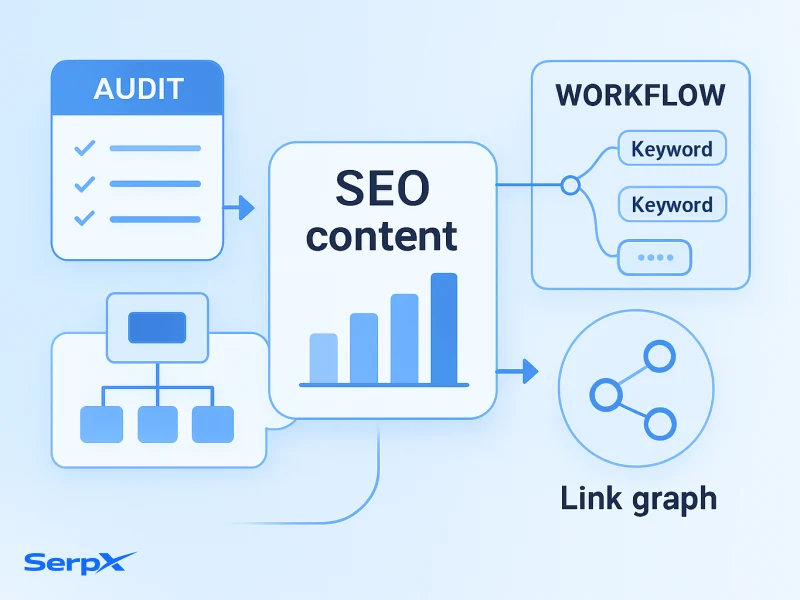
The core question isn’t simply “which tool writes faster?” It’s: does the tool help you plan for search intent, cover topic breadth, optimize on-page signals, and build a scalable content machine? If you rely on keyword research, competitive gaps, and internal linking as a core growth engine, you’ll want a system that embeds those data layers into the drafting process. Jasper can produce human-like copy quickly, but it often requires manual enrichment to hit SEO targets. SerpX AI is designed to operate inside your SEO workflow, turning data into content that’s ready for optimization, publishing, and measurement.
Think in terms of outcomes: faster briefs and outlines, content that’s easy to optimize for intent, and measurable improvements in topic coverage and internal authority. If you’re a SAS, agency, or enterprise team that needs scale without sacrificing SEO rigor, the decision tends to swing in favor of a tool that blends optimization with drafting. If you’re building brand voice from scratch and are willing to tune optimization later, Jasper can be a strong drafting ally—but you’ll want a structured optimization layer on top.
How SerpX AI differs from Jasper for SEO content
One thing many teams miss:
SerpX AI isn’t just a writing assistant—it’s part of a data-driven SEO workflow. Here are the practical differentiators that matter for SEO teams:
- SEO-centric data sources: SerpX AI plugs into keyword gaps, competitor analysis, and topical authority signals so drafts align with what actually drives rankings.
- Built-in optimization prompts: Drafts come with suggested headers, internal linking opportunities, and on-page nudge notes tailored for search engines and readers.
- Workflow automation: It’s designed to slot into your content calendar, briefs, review rounds, and publication pipelines without exporting to a separate system.
- Quality gates: Plagiarism checks and AI-content detection help ensure originality and compliance with quality standards before editors see drafts.
- Direct tooling integration: Access to keyword-gap analysis, competitor keyword research, and backlink insights from within one platform reduces context-switching.
Jasper remains a strong general-purpose writing assistant. It excels at fast draft generation and creative copy. The gap emerges when you need SEO-conscious output that reduces rework and aligns with established content architectures. If your goal is scalable SEO-first content, SerpX AI provides an integrated path that Jasper lacks out of the box.
Tip: Use SerpX AI to generate a first draft guided by a keyword-gap brief, then bring in a human editor for final tuning and internal-link mapping. This hybrid approach often outpaces either tool alone.
Content quality and optimization in practice
Quality for SEO isn’t just about grammar; it’s about relevance, coverage, and structure. SerpX AI helps you hit the right balance with: topic completeness, intent alignment, and structured optimization signals baked into the draft. You’ll typically see benefits like clearer topic clusters, more complete coverage of user intents, and easier insertion of authoritative data points that search engines reward.
Consider a content plan for a 1,500-word guide on AI SEO for 2026. With SerpX, you begin from a data-driven outline: what users search for, which questions dominate the topic, and where to build internal links. The resulting draft includes heading coverage aligned with intent signals and ready-to-link sections that you can quietly audit for semantic depth. Compare that with a baseline draft from Jasper: you may get readable prose, but you’ll likely add extra edits to reach the same SEO completeness.
Importantly, SerpX also channels content through quality checks. Use the integrated plagiarism and AI-detection tools to maintain trust and originality. This helps you publish with confidence and reduces downstream churn from search algorithms reacting to low-utility content.
Supercharge SEO drafts with our AI-driven toolkit. Explore AI SEO Tools for keyword intent, clustering, and content optimization guidance.
Workflow and integration into your SEO lifecycle
From an SEO operations perspective,
A practical SEO workflow blends discovery, drafting, optimization, and measurement. SerpX is built to slot into every stage:
- Define topic via keyword-gap and competitor analyses to determine why this content matters.
- Generate an outline and a first draft that already respects your content brief and target intents.
- Apply built-in optimization prompts—headers, meta hints, and internal-link blocks—without leaving the editor.
- Run AI-content detector checks and plagiarism reviews to ensure originality and compliance.
- Publish with structured data, internal links, and a plan for ongoing updates tied to your keyword gaps.
For teams prioritizing data-rich briefs, SerpX’s Keyword Gap Tool and Competitor Keyword Research provide a live feedback loop that keeps content relevant as rankings shift. If you’re used to switching between tools, this reduces cognitive load and speeds up iterations.
Or test your topic with a live gap analysis. See the Keyword Gap Tool in action and compare with Jasper-like drafting speeds.
Practical trade-offs: speed, control, and cost
No tool is perfect for every situation. Here are common trade-offs to help you pick with fewer regrets:
- Speed vs. depth: Jasper-style drafting may win on speed, but SerpX AI often wins on topical depth and SEO alignment when you factor in the briefing and optimization steps.
- Control over voice: Jasper can imitate brand voice with prompts, but SerpX emphasizes consistency through structured outlines and optimization hints, which reduces drift over long-form series.
- Cost vs. ROI: If your content needs high precision and fewer edits, SerpX’s integrated workflow tends to cut total cost of ownership by reducing rework. If you’re just starting and need rough drafts fast, Jasper’s lower entry price can be appealing, though you’ll invest more in SEO edits later.
A useful heuristic: if you can’t tolerate frequent post-publication rewrites, favor a system that enforces SEO practices at drafting time. SerpX is designed with that guardrail in mind.
Curious about ROI? Check our pricing page to compare plans and what’s included for SEO-focused content workflows: Pricing.
SerpX workflow: practical steps you can emulate today
That matters because
Here’s a concrete, journalist-like workflow you can adopt in your team, using SerpX as the backbone:
- Start with a Topic Brief generated from your Keyword Gap Tool and Competitor Keyword Research. This ensures you’re answering questions people actually search for.
- Generate an outline that prioritizes intent coverage and interlink opportunities. The outline becomes your manuscript skeleton.
- Draft with SerpX AI, guided by the outline and optimization prompts. Make the first pass content-ready for readability and SEO alignment.
- Run automated checks: AI-content detector, plagiarism checker, and a lightweight fact-check pass for data points.
- Publish with structured data, internal links, and a maintenance plan that flags updates for high-priority keywords.
To keep the cycle tight, reuse established content templates and scorecards. For example, tie a piece’s success to its coverage of clustered topics and the number of internal links created, which you can monitor through SerpX-linked dashboards.
Feature comparison: SerpX AI vs Jasper for SEO content
| Aspect | SerpX AI | Jasper |
|---|---|---|
| SEO-centric drafting | Yes — built-in briefs, alignment with keyword gaps, topic coverage | Limited — drafting, with separate SEO steps required |
| Data integration | Direct access to keyword gap, competitor keywords, linking opportunities | Minimal integration; relies on manual data imports |
| Content optimization | Integrated prompts for headers, meta hints, internal links | Requires post-draft optimization externally |
| Quality checks | AI-content detector and plagiarism checks included | Typically not bundled; may need third-party tools |
| Speed vs quality balance | Structured drafts with optimization baked in, fewer reworks | Very fast drafts; potential rework to hit SEO signals |
| Pricing signal | Integrated, outcome-focused plans (see pricing) | Subscription menus based on writing capacity |
Checklist and common mistakes
This becomes a problem when
Use this quick checklist before publishing. Then note the common mistakes teams should avoid:
- Checklist:
- Topic brief aligned to user intent and keyword gaps
- Outline with clear sections and internal-link opportunities
- SEO prompts activated in drafting (headers, metadata, linking)
- Fact-check for data points and citations
- Internal links mapped to related content clusters
- Publish and schedule updates for high-priority keywords
Common mistakes: treating AI drafts as final without human validation; ignoring user intent signals; and forgetting to map internal links during publishing.
Frequently Asked Questions
Frequently Asked Questions
From an SEO operations perspective,
Is SerpX AI better for SEO content than Jasper?
For teams prioritizing SEO-ready output with minimal rework, yes. SerpX AI embeds keyword gaps, topic coverage, and internal-link guidance directly into the drafting process, reducing post-production edits. Jasper shines when you need broad, fast prose across non-SEO tasks.
Can I use SerpX AI to write long-form content without Jasper?
Absolutely. SerpX AI supports long-form content workflows with topic coverage, outline-driven drafting, and optimization prompts designed for comprehensive guides, tutorials, and case studies.
How does SerpX integrate with keyword research?
SerpX centralizes keyword-gap analysis, competitor keywords, and topic planning within the same workspace, enabling drafting that already reflects ranking opportunities rather than chasing them after the fact.
Does SerpX include plagiarism detection?
Yes. The platform includes plagiarism checks and AI-content detection to help ensure originality before publishing.
What about pricing and ROI?
Pricing is aligned with SEO-focused workflows and content volumes. Compare plans on the Pricing page and consider the total cost of ownership when you factor in reduced rework and faster publishing cycles.
How do I get started with SerpX?
You can register directly to try the platform, or review the pricing options to choose a plan that fits your content velocity and SEO goals. See the Register and Pricing pages for details.
Related Articles
- SerpX vs Semrush: A Full, Honest Comparison (2026)
- SerpX vs Ahrefs: Which SEO Tool Is Better in 2026?
- Keyword Gap Analysis: Find Keywords Your Competitors Rank For
Ready to streamline SEO-focused content creation? See pricing or start your free trial today.
Apply these ideas with SerpX tools
Turn insights into action with practical workflows for keyword research, competitor analysis, backlink review, and SEO planning.