Affordable SEO Suites for European Marketing Agencies
A practical guide for European agencies evaluating affordable, integrated SEO suites. Compare features, price points, and workflows to choose tools that scale without breaking budgets.

Affordable SEO Suites for European Marketing Agencies
You’re running a European marketing agency with a growing list of clients, and the clock is ticking. You need an SEO toolkit that accelerates results without draining budgets or compromising data privacy. The obvious pitfall is chasing the lowest price and ending up with siloed, hard-to-integrate tools that waste more time than they save. This guide helps you evaluate affordable, integrated SEO suites—with practical decision criteria, real-world trade-offs, and a clear path to implementation that fits EU-based teams and clients.
Budget vs. velocity: a real decision problem
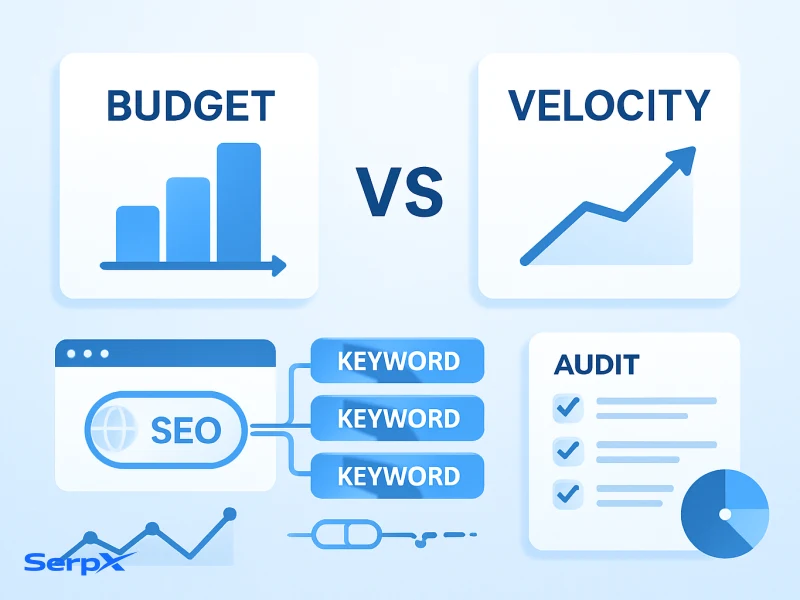
Low-cost tools can unlock rapid experimentation, but cheap isn’t always fast. Agencies that hesitate to invest in cohesive workflows risk longer cycles, inconsistent reporting, and missed opportunities. The sweet spot isn’t a perfect match of features at the lowest price; it’s a balance between affordable monthly costs, reliable data, and automation that actually saves your team time.
Ask yourself: does the suite enable end-to-end workflows—from discovery and keyword research to content optimization and reporting? Can your team onboard quickly, and can the tool scale as you onboard more clients without a major price jump? If the answer to these questions is yes, you’re likely looking at an affordable, practical option rather than a bare-bones workaround.
What to look for in an affordable SEO suite
From an SEO operations perspective,
- Clear pricing with predictable renewals and visible add-ons. Avoid unexpected increases when you add clients.
- EU data residency and GDPR-conscious data handling to ease client contracts and compliance reviews.
- AI-driven workflows that accelerate keyword research, content optimization, and reporting without demanding specialized data science skills.
- Integrated keyword research, content optimization, and link signals so you don’t bounce between platforms.
- Reliable data coverage for European markets, including multilingual content scenarios where relevant.
- Client-ready reporting with white-label options and easy-to-share dashboards.
- Onboarding and support that won’t break your sprint timelines or derail launches.
- APIs or automated exports to feed your existing dashboards or CMS workflows.
In practice, that means evaluating a few concrete questions during demos or trials: Do you get keyword trends for EU regions? Can you map content to user intent reliably? Is there a straightforward way to generate client-ready reports?
Why SerpX can be a budget-smart choice for European agencies
SerpX’s AI SEO tooling is designed to balance power with practicality. It’s built to help European teams avoid overpaying for features they don’t use, while still delivering front-line automation and integrated workflows. For agencies, the value proposition is simple: fast setup, scalable analytics, and clear guidance on where to invest effort first.
Key angles to consider when evaluating SerpX against other suites:
- Data workflows that align with typical agency cadences—discovery, optimization, and reporting in cohesive cycles.
- EU-friendly data handling and privacy-conscious features that satisfy client contracts.
- Practical AI-assisted workflows, including AI-driven keyword research and AI content optimization.
For deeper context on AI in SEO, see AI SEO in 2026: Complete Guide and What Is AI SEO? A Practical Guide. These resources help you benchmark what “affordable” should actually deliver in terms of automation and insight.
Trade-offs you’ll encounter and how to manage them
One thing many teams miss:
Every budget-friendly tool compromises somewhere. Common areas to watch:
- Data depth vs. breadth. You may get solid keyword signals for core markets but miss micro-niche opportunities in niche EU languages.
- Support depth can be less than premium platforms; plan for self-serve resources and faster internal onboarding within your team.
- Feature parity with enterprise-grade tools. You might trade advanced enterprise integrations for build-your-own automation in a few critical areas.
- Learning curve with AI features. Short, structured onboarding reduces time-to-value.
Mitigate by running a tight pilot: pick one client segment, define 3–4 measurable goals, and use a short trial window to validate data quality and reporting.
SerpX workflow: practical steps for European agencies
- Set up a pilot client in SerpX, aligning the project with that client’s target EU markets and language considerations. Define success metrics (rank changes, traffic, or conversions).
- Run a keyword gap analysis to identify opportunities your current stack misses. Use a ready-made framework to compare against top competitors in the same regions. Keyword Gap Tool makes this fast and repeatable.
- Prioritize content initiatives based on intent, volume, and ease of attainment. use AI-assisted content optimization to draft and refine pages that target high-value queries.
- Implement and monitor with automated dashboards that show weekly movement by region, language, and device. Use the data to adjust content calendars and outreach plans.
For practical AI-driven guidance, see AI content optimization with smart automation and AI SEO in 2026: Complete Guide.
Soft CTA: Explore powerful AI keyword research capabilities with our AI-focused resources.
Soft CTA: See how the Keyword Gap Tool can uncover opportunities you’re missing.
Soft CTA: Prefer free tools to start? Try our Free SEO Tools suite to complement your initial discovery.
Implementation Checklist for European Agencies
In real workflows,
- Map client goals to SEO metrics that matter for EU markets (local rankings, multilingual content performance, translations impact).
- Choose a target pilot client and a narrow scope (e.g., 2–3 pages, 1 language, 1 region).
- Configure analytics and reporting templates aligned with client dashboards.
- Run a 2–4 week pilot, collect data, and compare against baseline.
- Review results with stakeholders and decide on expansion or adjustment of scope.
Common mistakes when choosing an affordable SEO suite
- Focusing solely on price without validating data quality and coverage for EU markets.
- Underestimating onboarding time or the need for internal training on AI features.
- Ignoring reporting needs for clients, especially white-label capabilities and export formats.
- Over-committing to one technology stack before validating with a real client pilot.
Comparison snapshot: features and price bands
One thing many teams miss:
| Plan | Typical Price (EUR/mo) | AI Keyword Research | Content Optimization | Automated Reporting | API Access | EU Data Residency | Support Level |
|---|---|---|---|---|---|---|---|
| Starter | 0–19 | Basic signals | Template-based optimizations | Weekly | Limited | Yes | Community |
| Growth | 20–60 | Expanded keyword discovery | Content briefs + optimization | Automated with dashboards | Yes | Yes | Priority chat |
| Scale | 60–200 | Full-scale research, competitors | Advanced optimization and guidance | Real-time / customizable | Yes | Yes | Dedicated support |
Related Articles
- What Are Keyword Gaps?
- SerpX vs Semrush: A Full, Honest Comparison (2026)
- Best Semrush alternatives for SaaS startups 2026
Frequently Asked Questions
This becomes a problem when
What makes an affordable SEO suite truly effective for European agencies?
The right solution blends price with practical data coverage, EU-compliant data handling, and workflows that align with agency cadence—discovery, optimization, and reporting—without forcing teams to adopt clunky workarounds.
Should I prioritize AI features or data depth when buying on a budget?
Prioritize features that impact velocity and client outcomes. AI-assisted keyword research and content optimization can save significant time, but ensure the data quality supports real decision-making in the EU markets you serve.
How can I pilot a budget-friendly tool without risking client commitments?
Run a controlled pilot on a single client or sector, set a strict time frame (e.g., 4–6 weeks), and define 2–3 measurable outcomes. Use this pilot to validate data, workflow fit, and client-facing reporting.
What should I look for in EU-focused data handling?
Look for explicit data residency options, GDPR-compliant data processing, transparent data retention policies, and clear assurances about cross-border data transfers where relevant.
Is SerpX suitable for multilingual campaigns in Europe?
Yes, SerpX supports multilingual content scenarios and regional query signals. When evaluating, ask about language-specific keyword data and region-targeted reporting to ensure it meets your needs.
What is the best way to measure ROI on an affordable SEO suite?
Track incremental organic traffic, keyword rankings, and client-delivered outcomes (leads, bookings, sign-ups) per campaign. Combine these with client-facing dashboards to demonstrate value, especially during quarterly reviews.
Ready to explore pricing and start a trial? Visit our Pricing page or Register to get immediate access.
Apply these ideas with SerpX tools
Turn insights into action with practical workflows for keyword research, competitor analysis, backlink review, and SEO planning.