Best AI SEO Agents for Programmatic Content
Discover how to evaluate and deploy AI SEO agents for scalable, programmatic content. This practical guide covers criteria, a clean comparison, and SerpX workflows.
Best AI SEO Agents for Programmatic Content
The decision point: you need scalable programmatic content without drowning in tools
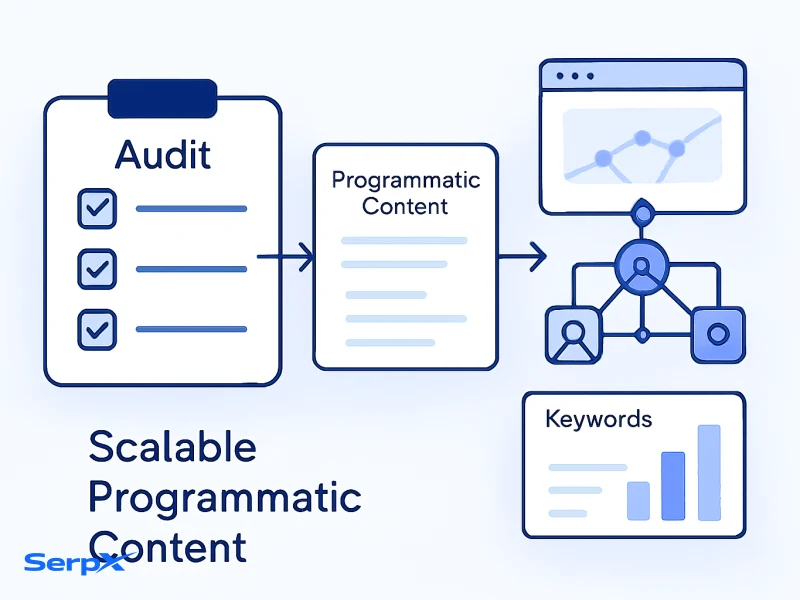
Teams building programmatic content face a familiar crossroads: adopt multiple AI agents that each excel in a slice of the workflow or rely on a single platform that claims to orchestrate it all. In practice, the first path produces chaotic tool sprawl, inconsistent output, and governance headaches. The second path can feel expensive and rigid if it locks you into a single vendor. The real question is how to orchestrate AI agents for scalable, high-quality content without sacrificing SEO signal or editorial control.
This guide helps you cut through the noise, compare real-world capabilities, and map a practical SerpX-centered workflow for programmatic content that actually moves rankings and traffic.
What are AI SEO agents for programmatic content?
One thing many teams miss:
AI SEO agents are modular components that automate parts of the content lifecycle with search intent in mind. For programmatic content, you want agents that can operate at scale, maintain alignment with data sources, and integrate with your CMS and analytics stack. In practice, you’ll use agents to:
- Detect user intent and cluster topics at scale
- Generate topic briefs, outlines, and meta data aligned with SEO goals
- Suggest internal linking and structured data signals
- Monitor content performance and trigger automated optimization loops
Importantly, AI agents work best when there’s a human-in-the-loop for quality control and governance. Relying solely on automation without guardrails leads to content that ranks poorly or misaligns with brand voice. For a practical approach, combine AI-driven workflow steps with transparent data sources and review checkpoints.
To deepen your understanding of AI-driven SEO concepts, see our primer on What Is AI SEO? and the practical guide to AI content optimization.
How to compare AI agents: criteria that actually matter
When evaluating AI agents for programmatic content, focus on the real drivers of SEO success and editorial control. Below are the criteria that separate a solid, scalable setup from a brittle one:
- Data sources and model transparency: Where is the data coming from, and can you audit the sources behind recommendations?
- Content quality control: Do you have built-in checks, plagiarism detection, and human-in-the-loop review gates?
- Workflow integration: Can the agent connect with your CMS, analytics, and project management tools?
- Scale and speed: How many briefs or pages can it process concurrently without quality loss?
- SEO signal fidelity: Are keyword intent, SERP features, and ranking signals accurately represented in outputs?
- Cost and ROI: Is pricing predictable, and does the tool deliver a measurable lift in traffic or conversions?
In practice, you want a balance: automation that accelerates production and guardrails that protect quality and SEO integrity. A checklist helps you avoid common missteps (see the Checklist section below).
Comparison of top AI SEO agents for programmatic content
That matters because
Below is a pragmatic snapshot. Use it to sanity-check capabilities against your editorial workflow. Note that tool prices and features evolve; treat this as a guiding frame rather than a vendor pitch.
| Agent | Best For | Strengths | Trade-offs | Ideal Use Case |
|---|---|---|---|---|
| SerpX AI | End-to-end AI SEO workflows | Integrated keyword research, content optimization, automation | Premium pricing, learning curve | SaaS/Content teams building programmatic pages |
| Jasper AI | Long-form content creation with SEO prompts | Strong language generation, templates | SEO data quality varies; needs editing | Blog series, landing pages with narrative copy |
| Writesonic | Rapid drafting and micro-content | Speed, multi-language support | SEO tuning may require extra steps | Product descriptions, updates, meta descriptions |
| Copy.ai | Short-form content and social assets | Ease of use, quick iterations | Limited built-in SEO tooling | Ad copy, topic briefs, quick outlines |
In practice, SerpX often provides the most cohesive, SEO-focused workflow when you need scale with governance. For a direct comparison, explore our no-fluff comparison to see how SerpX stacks up against other platforms.
SerpX workflow: a practical path from idea to publish
This is a concrete, repeatable flow you can implement today to build programmatic content with AI while maintaining quality signals.
- Define goals and topics. Start with a target topic cluster and correlate it to intent signals. Use AI keyword research in 2026 to surface high-potential keywords and user intents.
- Generate briefs and outlines. use SerpX AI to draft topic briefs and structured outlines that map to search intents and SERP features.
- Identify gaps and opportunities. Run the Keyword Gap Tool to find missing terms your competitors rank for. This step is essential before you invest in content production. (See the related article on Keyword Gap Analysis for methodology.)
- Analyze competitors and cluster data. Use the Competitor Keyword Research Tool to refine your topic clusters and surface content gaps.
- Publish with governance. Integrate with your CMS and apply on-page optimization suggestions, meta data, and internal linking recommendations. Monitor rankings and traffic with SerpX’s analytics, then iterate.
Tip: keep a tight editorial cycle. Use a pilot project with 5–7 pages to calibrate prompts, quality gates, and acceptable output variance before scaling to dozens of pages per week.
Try SerpX AI Tools to start building your programmatic content workflow today. See how our AI SEO Tools integrate with your existing stack.
Explore AI SEO ToolsFor deeper tactical guidance, read about AI content optimization and automation to understand how automation compounds editorial quality.
Trade-offs and common mistakes
This becomes a problem when
What to expect and what to watch
- Automation saves time but can introduce misalignment with brand voice if the guardrails are weak.
- Too many tools create governance overhead. Prefer a cohesive workflow that minimizes handoffs.
- Data quality matters more than flashy prompts. Always validate sources and verify outputs with human review.
- Relying on a single AI agent for all tasks increases risk if that agent stalls or changes in pricing/terms.
Common mistakes to avoid
- Skipping human review and publishing low-quality content that harms rankings.
- Ignoring structured data and on-page optimization opportunities discovered by the assistant.
- Underestimating the need for governance, versioning, and editorial standards across teams.
To mitigate these risks, pair AI outputs with explicit editorial checks and performance-based pilots before large-scale deployment. For a proven, integrated approach, consider our SerpX workflow as described above.
AI Agents Readiness Checklist
- Define your target topics and success metrics (traffic, conversions, time-to-publish).
- Audit data sources and ensure transparent prompts for keyword intent and SERP features.
- Set up human-in-the-loop review gates for outlines, meta data, and final content.
- Verify CMS and analytics integrations are functional (content scheduling, internal linking, tracking).
- Run a pilot project (5–7 pages) to calibrate prompts and measure output quality and ROI.
- Establish governance, versioning, and change control for ongoing optimization.
For a hands-on starting point, pair this checklist with our AI Keyword Research and Keyword Gap tools to seed your first programmatic topics.
Ready to test with real data? Use the Keyword Gap Tool and Competitor Keyword Research to begin.
Frequently Asked Questions
One thing many teams miss:
What is an AI SEO agent?
An AI SEO agent is a software component that automates a specific SEO task within a workflow—such as keyword research, outline generation, or optimization suggestions—while allowing human oversight and governance.
Do I need multiple AI agents or one platform?
It depends on your scale and complexity. A single platform with strong orchestration (like SerpX) can handle end-to-end workflows, while multiple specialized agents may be better for large teams with distinct content streams. The key is integration and governance, not tool count.
How do I measure success with AI agents for programmatic content?
Track outputs against your objectives: content velocity, time-to-publish, on-page optimization completion, ranking changes for target keywords, and traffic/engagement metrics. Use A/B tests and pilot programs to quantify ROI.
Can AI agents handle multilingual content?
Many AI agents support multilingual output, but quality varies by language. Validate language quality, localization accuracy, and cultural relevance with native editors before publishing at scale.
How does SerpX integrate with other tools?
SerpX offers integrations and APIs for AI-driven keyword research, content optimization, and gap analysis, plus native tools for content planning and analytics. See our AI Tools page for details.
What about cost and ROI?
Costs vary by feature set and scale. A well-implemented AI workflow can reduce editorial time and accelerate ranking gains, but you should run a pilot and tie outcomes to explicit business metrics to justify the investment.
Take the next step. See how SerpX can streamline your AI-driven programmatic content. Explore pricing or start a free register session today.
Apply these ideas with SerpX tools
Turn insights into action with practical workflows for keyword research, competitor analysis, backlink review, and SEO planning.