Best SEO software for high-growth startups in Canada
A practical, decision-ready guide for Canadian high-growth startups evaluating SEO software, with an actionable framework, trade-offs, and a SerpX-driven workflow.
Best SEO software for high-growth startups in Canada
If you’re leading a fast-growing Canadian startup, you know SEO needs to move at startup speed. You publish features, cohorts, and content in tight sprints, and every dollar must prove its ROI. The decision isn’t simply which tool is popular; it’s which software fits your pace, budget, and local market realities. This guide helps you evaluate the best SEO software for high-growth startups in Canada, with a practical decision framework, real-world trade-offs, and concrete steps you can take today.
The decision point: choosing SEO software for high-growth startups in Canada
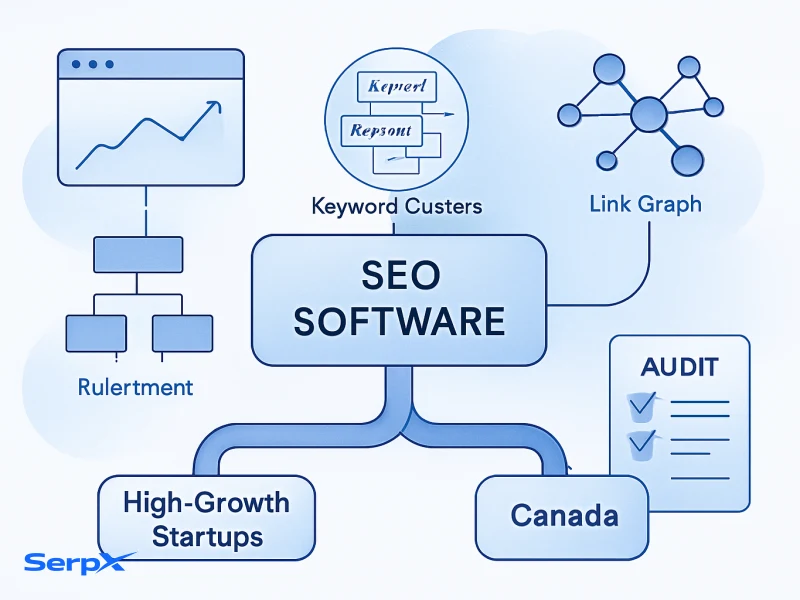
The pain is not just chasing rankings; it’s aligning SEO with product velocity. Canadian startups face distinct signals: bilingual or multilingual intent in markets like Quebec, local intent in major cities, and a need for fast feedback cycles to justify expansion plans. Many tools promise automation, but they constrain you with heavy onboarding, data latency, or rigid workflows. You want speed, accuracy, and a path to measurable growth that you can defend to stakeholders.
Before you choose, ask yourself:
- Can this tool surface high-value opportunities quickly in Canada’s search landscape?
- Does it integrate smoothly with my content process and tech stack (CMS, analytics, and dashboards)?
- Is the ROI clear when I scale from 1 to 5 product lines or markets?
- Will the AI-assisted workflows reduce manual toil without sacrificing quality?
In practice, the best software for your team should shorten the cycle from keyword discovery to content deployment, while providing reliable data you can trust for decisions.
What to look for in AI-powered SEO software
One thing many teams miss:
When you’re growing fast, you need AI that actually augments human judgment, not replaces it. Here are the features that matter for a Canadian startup:
- AI-assisted keyword research with intent signals, search volume, and localization for Canadian markets.
- Content optimization and briefs that translate insights into editorial directions and on-page guidance.
- Automation of repetitive tasks such as keyword clustering, brief generation, and status updates.
- Competitor and keyword gap analysis across markets to reveal growth opportunities you’re missing.
- Editorial workflow integration with your CMS and content calendar for end-to-end pipelines.
- Reliable data and performance dashboards that scale as you expand product lines and geographic focus.
- Local precision support for Canada-specific queries, bilingual content, and local SERP features.
For practical context, software that improves throughput by even 20–30% can justify an annual license for a fast-growing team. Keep an eye on onboarding time, data latency, and how well the tool supports editorial collaboration rather than just dashboards.
Tip: Explore SerpX AI-SEO Tools to see how automated keyword research and content optimization can fit into your sprint cycles.
SerpX workflow for high-growth startups
Here is a practical, repeatable workflow you can implement this quarter. It emphasizes fast wins, measurable impact, and iterative learning—crucial for Canadian teams balancing speed and quality.
- Align on growth goals with stakeholders and translate them into 3–5 target keywords and 2–3 target content themes per market (Canada-wide and Quebec-specific, if relevant).
- Kick off AI-driven keyword research to surface high-intent queries, long-tail opportunities, and localization gaps. See the AI Keyword Research 2026 guide for best practices.
- Cluster and prioritize cluster keywords by intent and funnel stage. Use SerpX to generate topic clusters and content briefs for each cluster.
- Create and assign content briefs with clear writer instructions, SEO targets, and CMS-ready structure. use AI-assisted optimization to improve meta data and on-page signals.
- Publish and optimize iteratively publish new pages and refresh existing assets. Track rankings, traffic, and conversions weekly to catch early movement.
- Measure impact with dashboards tie results to your product signups, trial activations, or MRR to justify ongoing investment.
- Scale with automation reuse successful briefs, templates, and playbooks as you expand to new markets or product lines. Always close the loop with a post-mortem after 6–8 weeks.
This workflow emphasizes practical steps over theory. It’s designed to be implemented with modest changes to your existing process, not a full-stack upheaval.
Need a quick starting point? Check the Keyword Gap Tool to identify a handful of high-potential opportunities to begin testing this week.
Comparison: essential criteria and SerpX fit
This becomes a problem when
Use this quick, practical table to compare core needs against what SerpX is built to deliver for high-growth startups in Canada. The goal is clarity, not hype.
| Criterion | Why it matters for fast-growing Canadian startups | How SerpX addresses it |
|---|---|---|
| Data quality and Canada coverage | Reliable, multi-source data with timely updates for local queries and bilingual contexts. | Integrated data sources and localization signals tailored to Canadian markets. |
| AI-powered workflows | Automation should speed up research, briefs, and optimization without sacrificing accuracy. | Automated keyword clustering, briefs generation, and on-page optimization prompts. |
| Competitor and keyword gaps | Identify opportunities competitors are missing in Canada and beyond. | Built-in gap analysis and cohort comparisons to reveal quick wins and expansion paths. |
| Editorial integration | Seamless editorial calendars and CMS integration reduce context switching. | Direct content briefs and structured outputs ready for CMS workflows. |
| Speed and scalability | Ability to scale across products and markets without exploding headcount. | Templates and playbooks that scale as you grow—without compromising quality. |
| Cost and value for startups | Clear ROI, predictable pricing, and scalable plans. | Flexible pricing and value-driven features designed for growth teams. |
Best for teams that want AI-assisted workflows and tight editorial integration to accelerate content velocity in Canada. Not best for if you need enterprise-grade data in multiple languages without lightweight collaboration features.
As you compare, you may also read about SerpX alternatives and direct comparisons in our detailed analyses: SerpX vs Ahrefs and SerpX vs Semrush.
7-step starter checklist
- Define growth goals for Canada and, if applicable, for bilingual markets. Tie them to 3–5 measurable SEO outcomes.
- Inventory your current assets and map pages to buyer personas and search intent.
- Identify target keywords with high value and achievable competition in your niche using Keyword Gap Tool.
- Set up data sources (Search Console, Analytics, CRM) and connect them to your SEO workflow.
- Configure AI-powered workflows in SerpX to generate briefs, optimization prompts, and dashboards.
- Create a lightweight content calendar focused on 4–6 content pieces per month aligned to the clusters you identify.
- Establish a cadence for review and reporting, with clear owners and a 30-60-90 day monitoring plan.
Following this checklist helps you avoid scope creep and accelerates learning in a real business context. For ongoing validation, see our practical guide on AI-driven keyword research and content optimization: AI Content Optimization.
Ready to test? The Backlink Checker can help you validate link opportunities before you scale a campaign.
Common mistakes to avoid
One thing many teams miss:
- Treating AI as a replaceable writer rather than a productivity multiplier. Always pair AI outputs with human editorial judgment.
- Relying on a single data source. Validate with multiple signals, especially for local and bilingual queries.
- Launching too many experiments at once. Prioritize 1–2 clusters to measure impact clearly.
- Neglecting the content process integration. If briefs don’t translate to CMS-ready assets, you’ll waste momentum.
- Ignoring local intent. Canada’s search landscape includes regional nuance; failing to localize content reduces relevance.
- Underinvesting in measurement. You need dashboards that connect SEO to onboarding, trial starts, and ARR.
- Overlooking content quality for speed. Fast output is useless if it doesn’t meet user intent and brand standards. For quality checks, consider AI Content Detector and plagiarism checks when needed.
Frequently Asked Questions
What makes a tool the best SEO software for high-growth startups in Canada?
The best tool combines fast, AI-assisted workflows with reliable Canada-focused data, easy CMS integration, and a clear path to measurable ROI. It should support bilingual and local search nuances and scale as you expand product lines.
Can AI automate keyword research without sacrificing quality?
AI can accelerate discovery and clustering, but human judgment remains essential. Look for software that surfaces hypotheses and then routes them into editorial briefs for writers and editors to validate.
Is SerpX suitable for bilingual markets in Canada?
Yes. SerpX supports localization signals and can help you surface bilingual content opportunities, tailor keyword intents, and structure content for both English and French audiences where relevant.
How quickly can I expect results after adopting a new SEO tool?
Results depend on your starting point, but you should see momentum in 4–8 weeks as new content is published, updated briefs are deployed, and rankings move for high-value keywords. Track qualified traffic and trial conversions to measure impact.
What about pricing for startups?
Pricing varies by plan and scale. Start with a growth-oriented package and adjust as you validate ROI. See our pricing page for current options and an entry-level path that fits early-stage teams.
Where can I learn more about AI SEO best practices?
We publish practical guides on AI SEO and keyword research. For a foundational overview, start with What Is AI SEO? A Practical Guide and AI SEO in 2026.
Related Articles
That matters because
- AI SEO in 2026: Complete Guide to Ranking Faster with Automation, Data & Smart Workflows
- What Is AI SEO? A Practical Guide for Faster Research and Smarter Optimization
- SerpX vs Semrush: A Full, Honest Comparison (2026)
Ready to scale? See pricing or get started
When you’re ready to take action, explore SerpX pricing and start a trial to validate the workflow with your team. You’ll see how AI-driven research, content briefs, and dashboards translate into real-world improvements in your Canadian growth plan.
Apply these ideas with SerpX tools
Turn insights into action with practical workflows for keyword research, competitor analysis, backlink review, and SEO planning.